
In context
Dial-Up Era ASCII Art: Usenet Trivia on Pre-Emoji Context

Published
I learned to read early internet conversations the same way you learn to read a friend’s group chat: not just for the words, but for the vibe. The funny part is that in the dial-up era, people were already doing “tone indicators” long before anyone called them that. They just did it with punctuation, sideways faces, and little text drawings that traveled cleanly through Usenet posts and email.
This is your trivia trip back to the 1990s, when bandwidth was precious, sarcasm was risky, and a few characters of ASCII could save a conversation from going completely off the rails.
Quick refresher: what made Usenet feel different
Usenet was a massive network of discussion groups (newsgroups) distributed across servers. It was mostly plain text, which meant:
- No rich reactions like today’s emoji picker.
- No consistent fonts or layouts across different newsreaders.
- Quote chains were common, with each reply nesting older messages beneath it.
- Tone was easy to lose, especially when people were debating games, politics, or fandom drama at 2 a.m. on a slow connection.
In that environment, ASCII art was not “decoration” so much as social glue. It was context you could copy, paste, and trust to survive the trip.
If you like internet history trivia like this, our Trivia guide is where we stash more rabbit holes.
Trivia: ASCII art vs. emoticons vs. emoji
Before we get into the fun bits, here is the simplest way to separate the terms:
- ASCII art: pictures made from keyboard characters, often bigger than a line. Think: a tiny shrug person, a cat, a logo, or a whole banner.
- Emoticons: short character faces like :-) or ;‑). These were the workhorse tone markers.
- Emoji: standardized pictographs encoded as characters (what your phone keyboard inserts). Those came much later for most English-speaking users.
In practice, Usenet users mixed all three ideas (even before emoji existed) because the goal was the same: make sure your intent survived plain text.
Why ASCII art mattered on dial-up
1) It carried emotion in a medium that flattened everything
In a fast-moving thread, “sure” could mean “sure!” or “sure… whatever.” Without vocal tone, tiny visuals did the heavy lifting.
Trivia detail: the classic sideways emoticon :-) is often credited to Scott Fahlman (posted in 1982), and by the 1990s it had become common shorthand across forums, email lists, and Usenet. Many users were not trying to be cute, they were trying to be understood.
2) It was lightweight, portable, and platform-proof
ASCII art was made of characters every system already supported. A post could travel across servers and still “render” the same way, which was not always true of early graphics, attachments, or proprietary formats.
3) It acted like an early “reaction”
If someone posted great news, you might see \o/ (arms up cheering) or a small celebratory doodle. If a thread got tense, a well-placed :-P could say “I’m teasing” without a paragraph of explanation.
Classic Usenet tone markers
Here are some era-appropriate examples that did real conversational work. Not everyone used every one of these, but you would see them enough to learn the dialect quickly.
- :-) or :) = friendly, joking, softening a statement
- ;-) = wink, “I’m being playful” or “you know what I mean”
- :-D = laughing, big enthusiasm
- :-/ = unsure, skeptical, awkward
- :-( = disappointment, sympathy, seriousness
- :-P = teasing, kidding, mild trolling that claims innocence
- ;-P = teasing with extra “don’t take this literally” energy
- *shrug* or \_(ツ)_/ (later variant) = resignation, “it is what it is”
One thing I used to remind people when I moderated: emoticons were not about being immature. They were about being legible.
ASCII art as context
Signatures that signaled identity and tone
Usenet signatures were often short, but some users added a tiny ASCII flourish or a mascot. It worked like a vibe check: “I’m a friendly regular,” “I’m a sci-fi person,” “I’m here to joke,” or “I’m very serious about this topic.”
“Stage directions” before people called them tone indicators
Actions in asterisks were extremely common: *sigh*, *facepalm*, *ducks*, *runs*. These were not just theater kid energy. They were a way to add body language in a body-language-free medium.
Modern equivalents are basically reaction images, GIFs, and tone tags, but the goal is unchanged: reduce the chance that someone reads you as hostile.
Thread temperature control
When a discussion started heating up, users sometimes used ASCII to de-escalate without writing a whole apology. A small grin face after a sharp sentence could communicate “debate mode, not personal attack.”
And yes, it could be abused. People also used the same tools to be snarky while maintaining plausible deniability. If you have ever seen someone add “lol” after something mean, you understand the dynamic.
Mini trivia round
In the dial-up era, you could often tell what kind of post you were reading just from the first few characters. Try these:
- > > > at the start of multiple lines
- ROTFL sprinkled into a reply
- *cough* placed before someone made a point
- :-) added after a blunt correction
Answers
- Quoting. The greater-than sign marked quoted text so readers could track what was being answered.
- Laughter and bonding. Acronyms like ROTFL were a quick social signal: “I’m amused, I’m with you.”
- Softening a nudge. “*cough*” often meant “I’m hinting at something” or “I’m calling this out, but playfully.”
- Damage control. A smiley after a correction often meant “I’m not trying to be rude.”
If you want a broader primer on how online shorthand works, our Slang Dictionary guide is a good jumping-off point.
Why this still matters in 2026
Even with emojis everywhere, we still fight the same battle: text strips away tone, and humans fill in the blanks based on mood, context, and group norms.
What changed is the toolbox. Usenet gave us emoticons, ASCII art, and asterisks. Modern platforms give us emoji reactions, stickers, GIF replies, and platform-specific cues like read receipts and typing indicators. The underlying social need is the same: help me hear you the way you meant it.
If you are ever unsure what a modern phrase means in a specific comment thread, I put my “community moderator brain” into our guide on how to work out unfamiliar internet slang. It is basically the same skill Usenet users practiced daily, just updated for today’s feeds.
ASCII art etiquette
This is my favorite nerdy footnote: people argued about ASCII art the way we argue about loud GIFs now.
- Keep it readable: overly wide art could wrap badly on different screens.
- Keep it considerate: huge blocks of art were seen as clutter or spam in many groups.
- Match the room: technical groups tended to prefer minimal emoticons, while fandom and humor groups were more expressive.
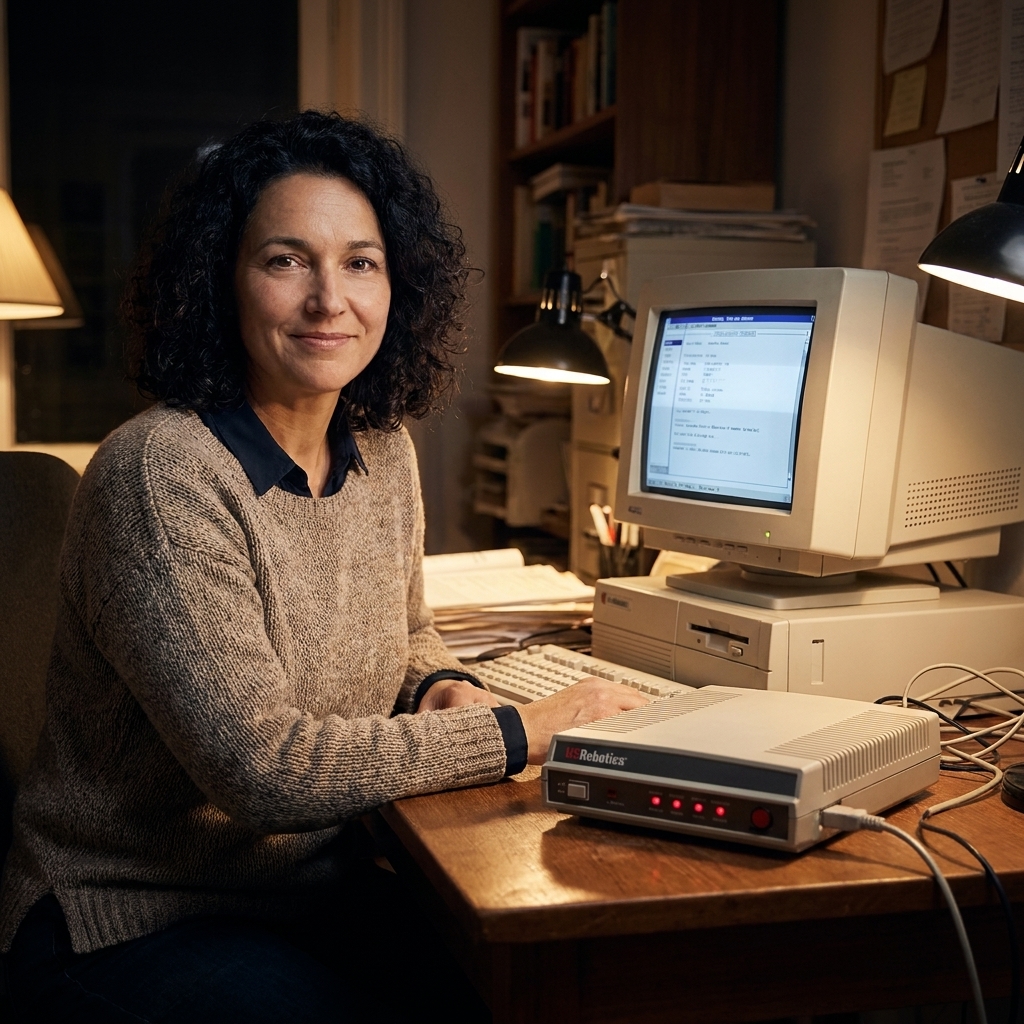
Basically, “know your audience” existed even when the audience arrived via a beige tower PC and a screeching modem.
Sources for further nostalgia
And if you want to know who is behind these deep dives, you can find me on our author page: Jasmine Porter.