
In context
Courtroom Slang Trivia: Cases That Turned on Context

Published · Last updated
I have moderated enough chaotic comment threads to know this truth in my bones: the fastest way to start a fight is to screenshot one line and remove the vibe. Courts have been learning that lesson too. Over the last decade, judges and juries have repeatedly had to do what internet regulars do all day: read between the lines, decode slang, and ask, “Wait, what did this mean in context?”
Below is courtroom slang trivia you can actually use, because it pulls from real cases and real courtroom patterns where digital language, memes, lyrics, emojis, or platform norms mattered. Think of it as a guided tour of moments when the law briefly had to become a very serious group chat interpreter.
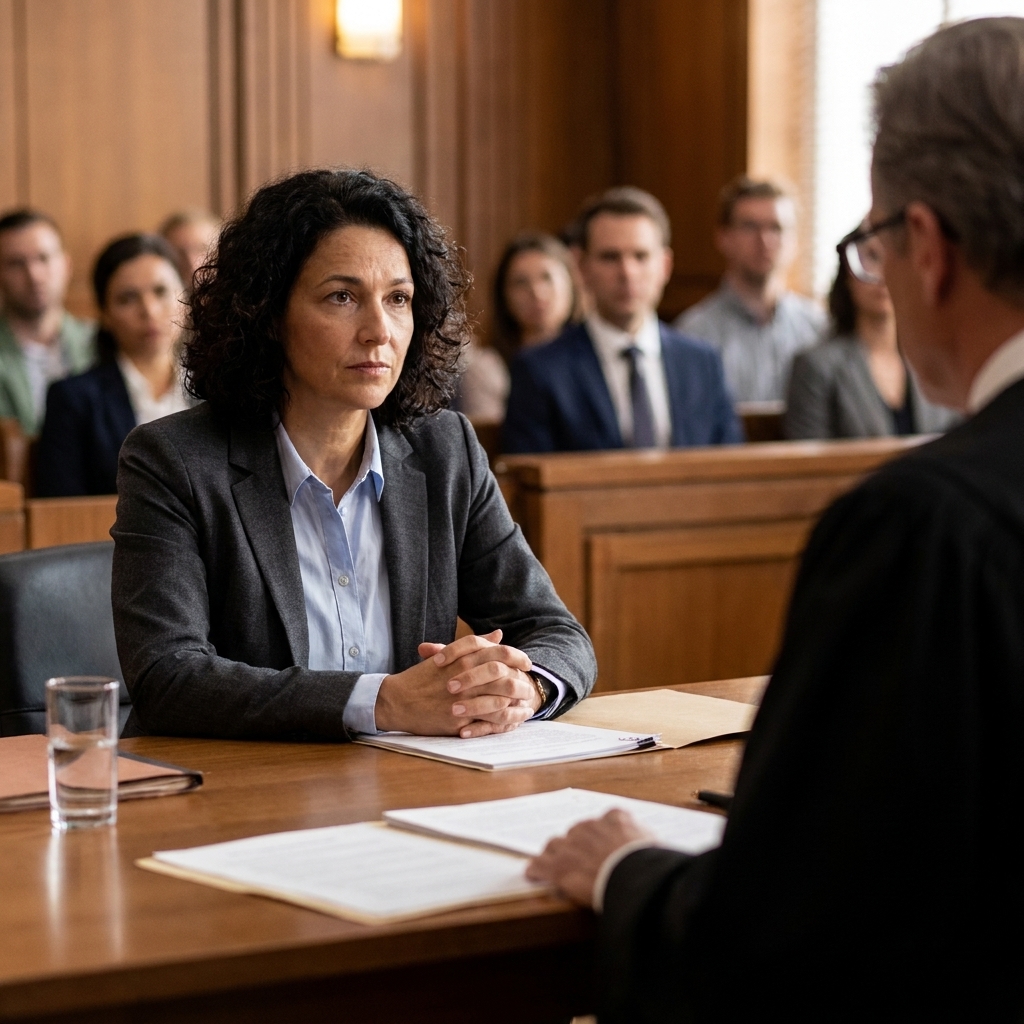
Trivia round 1: “Just words” that were not just words
1) Elonis v. United States (2015): When Facebook “lyrics” met threat law
Context clue at issue: Were violent-sounding posts “therapeutic rap style,” edgy venting, or true threats?
Anthony Elonis posted graphic statements on Facebook about his ex-wife and others. He argued they were expressive, in the style of rap lyrics, not serious threats.
The U.S. Supreme Court did not decide “rap lyrics online are protected” in any broad sense. What it did do was tighten the mens rea piece of the federal threat statute at issue. More specifically, the Court reversed because the jury instructions allowed conviction on a negligence style standard, basically a “reasonable person would view this as a threat” approach, without requiring proof of the defendant’s mental state beyond that.
The Court held a conviction under 18 U.S.C. § 875(c) cannot rest on negligence alone, and it did not decide whether recklessness would be enough.
Still, Elonis became a landmark example of how courts get pulled into online context anyway. Even when the legal dispute is about intent, the arguments usually lean on the same signals moderators argue about every day: persona, audience, timing, and whether the post is built to land as performance or intimidation.
- Trivia takeaway: “I was joking” is not a magic spell. In threat cases, context matters, but the legal fight can hinge on what the speaker understood and intended, not only how strangers took it.
External reference: Elonis v. United States on Justia
2) Commonwealth v. Knox (Pennsylvania, 2018): Rap lyrics treated as a true threat
Context clue at issue: Were lyrics posted online a “true threat” or artistic expression?
In Commonwealth v. Knox, a teenager’s rap lyrics posted online were prosecuted as terroristic threats directed at police. The Pennsylvania Supreme Court ultimately affirmed the conviction, concluding that the lyrics could be treated as a true threat under the circumstances.
This is one of those uncomfortable, useful examples for internet language nerds: genre matters, but it is not a get out of jail free card. Courts can still decide that something styled like art can be understood as a serious expression of intent to commit violence, especially when the language is specific and aimed at identifiable people.
- Trivia takeaway: “It is a rap lyric” does not automatically end the analysis. Courts zoom in on target, specificity, surrounding events, and how the communication would land for the people it appears to be aimed at.
Trivia round 2: Emojis are evidence now
3) State v. Shepherd (Minnesota, 2024): When tiny cues become arguments
Context clue at issue: When messages are evidence, can emoji and punctuation affect what a jury thinks the message meant?
In State v. Shepherd, the Minnesota Supreme Court dealt with a dispute about how message evidence was handled at trial. I am not going to pretend the opinion is “about emojis” in a simple, viral explainer way. The safer, truer takeaway is this: modern cases routinely involve texts and social messages, and when those messages are shown to a jury, the fight is often about whether the meaning got flattened when the conversation was pulled out of its original context.
That is where the little stuff starts to matter. A wink, a skull, a heart, a laughing face. Even a period can be a tone choice online, the difference between neutral and icy, between “ok” and “ok.”
- Trivia takeaway: Emoji interpretation is not fluff. If a case turns on intent or implication, tiny cues can become a big deal, especially if one side presents the messages in a way that strips the tone.
External reference: State v. Shepherd (Minnesota Supreme Court) on Justia

Trivia round 3: When platforms change meaning
4) The “it was a copypasta” moment, and why courts still need the receipts
Context clue at issue: Is a viral block of text a “statement of fact,” a joke template, or performative internet theater?
Not every context-heavy fight becomes a neat appellate opinion you can cite, but the pattern shows up constantly in trial practice: someone posts a meme-y wall of text, the other side reads it literally, and suddenly the court has to learn what a copypasta is.
This is why screenshots alone can be misleading. With copypasta culture, the meaning lives in the repetition. The “original” is less important than the fact that it is a known template deployed for effect, irony, intimidation, or clout.
- Trivia takeaway: Platform-native genres (copypasta, “notes app apologies,” “ironic threats,” ratio culture) often require an explanation of how people use them, not just what the words say.
If you want a quick refresher on how copy and paste culture works, I broke it down here: Decoding copypastas. And if you have ever stared at a screenshot and thought “I am missing something,” this one is your best friend: How to work out unfamiliar internet slang.
5) Captions, clout, and coded talk
Context clue at issue: Was a caption a literal confession, a persona, or a genre-coded flex?
It is not unusual for courts to see social posts that borrow from rap, drill, and meme formats where exaggeration is part of the language. The legal system does not get to ignore genre, because genre tells you what a reasonable reader on that platform might infer.
Here is the practical version: the same three words can land totally differently depending on the community and the moment. “Pull up” can be “come over,” “show up,” or “I want smoke.” “Free him” can be literal support for someone incarcerated, stan-ish defense of a celebrity who did something questionable, or an ironic pile-on. Without the surrounding thread, you are guessing.
This is also where “who is the audience?” matters. A private message to one person is interpreted differently than a public post curated for clout.
- Trivia takeaway: In court, a post is rarely read alone. Prosecutors and defense attorneys build meaning by adding surrounding posts, timestamps, message threads, and real-world events.
What courts look for in context
When I am moderating, I do the same basic checklist courts do, just with lower stakes and more anime avatars.
Context clues that matter
- Thread position and replies: Is it a standalone statement, a response, or a quote-tweet style dunk?
- Audience and visibility: Public performance posts often lean hyperbolic. Private messages often lean direct.
- Timing: Was it posted right after a breakup, a firing, a news event, or a real-world conflict?
- In-group language: Slang can be affectionate, teasing, or hostile depending on community norms.
- Emojis and punctuation: Winks, skulls, “lol,” all caps, and periods can flip tone.
- History between the parties: A phrase can be harmless in one relationship and terrifying in another.
This site is basically built on that idea. If you want a fast mental model for “tone signals,” I have a whole explainer on tone indicators like /s and /j. And if you want the bigger picture of why meanings slide around over time, see the lifecycle of internet slang.
Mini quiz: Spot the missing context
Try these like a juror would. The point is not to guess perfectly. It is to notice what you would need to know before you felt confident.
Message: “bet. pull up 😌”
- Missing context you would want: Who is talking to whom? What was the prior message? Is this friendly planning, flirting, or confrontation language?
Post: “you’re done for. lol”
- Missing context you would want: Is this banter between friends? Is there an ongoing dispute? Was there stalking, prior threats, or a power imbalance?
Caption: “free him” under a photo
- Missing context you would want: Is “him” a friend in jail, a celebrity caught in drama, or a meme phrase being used ironically?
If your brain immediately started asking questions, congrats. You are doing what courts have to do, only you get to do it from the comfort of your couch.
Why this trivia matters
The legal system moving slowly is a meme for a reason. But these examples show something important: when language gets messy, courts cannot rely on dictionary definitions alone. Meaning is platform norms, intent signals, tone markers, and the social reality around the post.
And on a smaller scale, it is a reminder for the rest of us too. If you are about to screenshot someone’s words and assume the worst, consider doing what a decent moderator, a decent juror, or a decent friend would do first: ask what else was said, what came before, and what the speaker was trying to do.
If you want more context-forward trivia, you might like internet slang trivia night ideas or the bigger roundup hub at Guide: Trivia.