
In context
From Love Island to RuPaul: Reality TV Slang in the Wild

Published
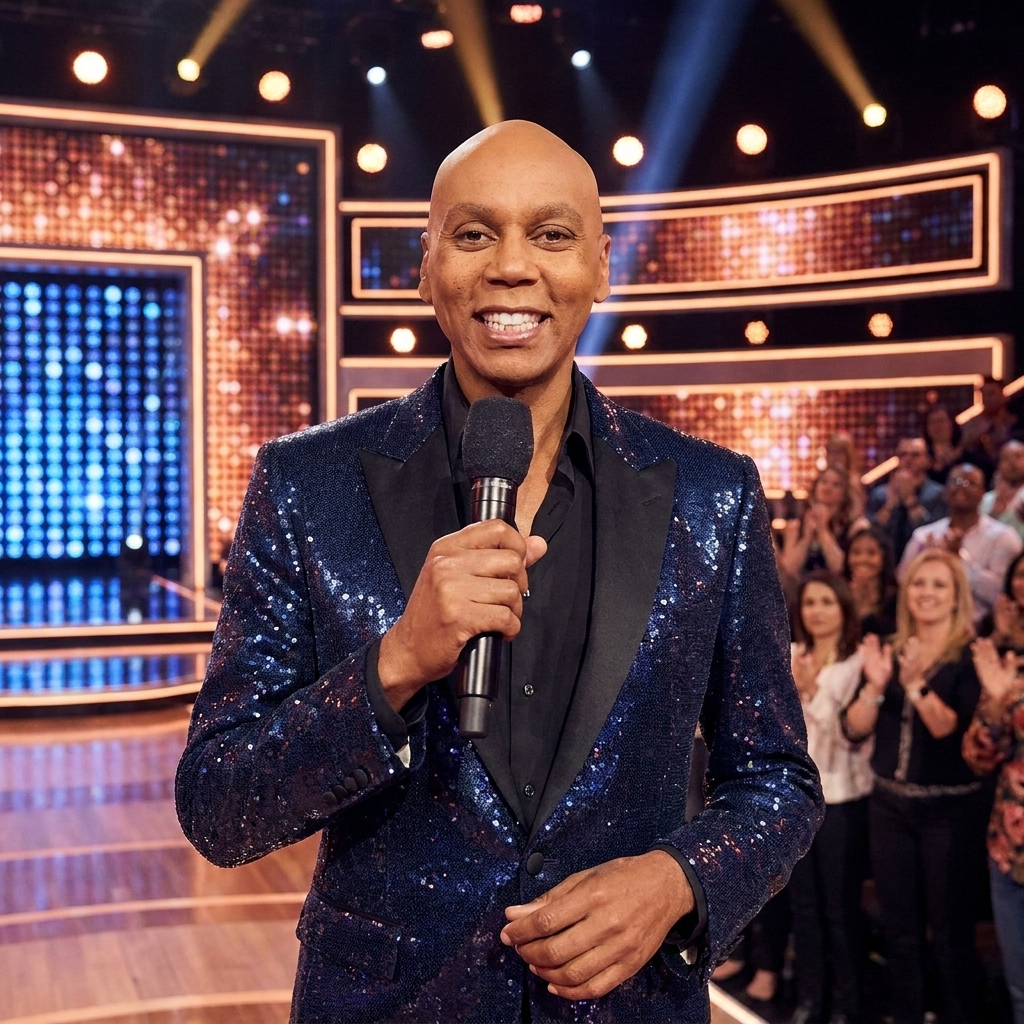
I learned to fear two things as a community moderator: a vague screenshot and a quote with no context. Reality TV slang is basically both. A line gets ripped out of a confessional, turned into a reaction image, then used as a full sentence in group chats by people who have never seen the episode. And somehow it still works.
But it only works because the original screen context quietly travels with it. Even when we think we are “just quoting,” we are borrowing the scene’s tone: flirtation, shade, sincerity, competition, melodrama, or pure camp.
This piece is your decoder ring for how phrases from shows like Love Island and RuPaul’s Drag Race leak into mainstream internet slang, and why their meaning changes the second they leave the villa or the runway.
Why reality TV slang sticks
Reality TV is one of the best slang factories because it does a few things social platforms are already built for:
- It turns emotion into soundbites. Confessionals reward short, repeatable lines. So does TikTok. So does X. So does your friend sending one sentence after being left on read.
- It’s highly contextual on purpose. The audience knows the backstory, the alliances, the tension, the edit. When the quote goes viral, people recreate that context with tone and timing.
- It comes with built-in roles. The villain, the underdog, the delusional flirt, the chaos agent, the narrator. Slang thrives when you can assign it to a role in your own story.
- It’s already semi-performative. Contestants speak like they’re being clipped for later because they are. That makes lines easier to remix without losing their flavor.
In other words: reality TV speech is pre-memed. The internet just finishes the job.
If you like this kind of “meaning depends on the moment” decoding, you’ll probably enjoy our broader approach to context in slang at Work Out Unfamiliar Internet Slang and the platform angle in How to Read TikTok Slang With Context Clues.
Love Island slang

Love Island slang spreads fast because it’s basically a closed ecosystem. The same actions happen on repeat (pulling for chats, coupling up, recoupling, testing connections), so the show develops its own dialect to keep up.
When that dialect hits the internet, it usually keeps its original DNA: it’s about romance as strategy, and feelings as something you negotiate out loud.
“My type on paper”
On the show: A polite way to say “you’re objectively attractive and socially acceptable for me to be seen with,” often followed by “but…” and a pivot to chemistry.
Online: A way to distinguish between what you think you should want and what you actually want. It can be sincere, but it’s often used as self-drag.
- Sincere: “She’s my type on paper but I panic when she compliments me.”
- Self-aware: “My type on paper is emotionally available. My type in real life is a guy who owns one spoon.”
“I’ve got a text!”
On the show: A siren. The villa usually freezes because a text often means a twist, a date, or chaos.
Online: People use it to announce incoming drama or important updates, usually with mock urgency.
- “Group chat, I’ve got a text. The venue changed.”
- “I’ve got a text. HR wants to ‘circle back.’”
“Can I pull you for a chat?”
On the show: A formal request to have a private conversation that is definitely not private.
Online: A joking way to ask for a serious talk, especially when the topic is awkward. The humor comes from treating everyday life like a produced storyline.
“It’s what it’s” and “at the end of the day” (villa edition)
On the show: These phrases are coping mechanisms. They soften rejection, excuse bad behavior, or signal that someone’s moving on because there’s a recoupling in 12 hours.
Online: They can mean resignation, but they also carry a specific reality TV shrug: “I’m acknowledging this is messy, and I’m choosing not to unpack it right now.”
“He gave me the ick”
On the show: The moment attraction snaps. Often triggered by something tiny that suddenly feels enormous. A dance move. A phrase. The way he holds a water bottle.
Online: “The ick” definitely predates Love Island, but the show helped popularize this phrasing and the whole confessional-style storytelling around it. It implies the feeling is irrational, immediate, and non-negotiable. It also signals you’re narrating your own dating life like a season arc.
Dating slang tends to migrate across platforms quickly, so if your brain likes this genre, our Dating App Slang Decoded guide pairs nicely with the villa vocabulary.
Drag Race slang
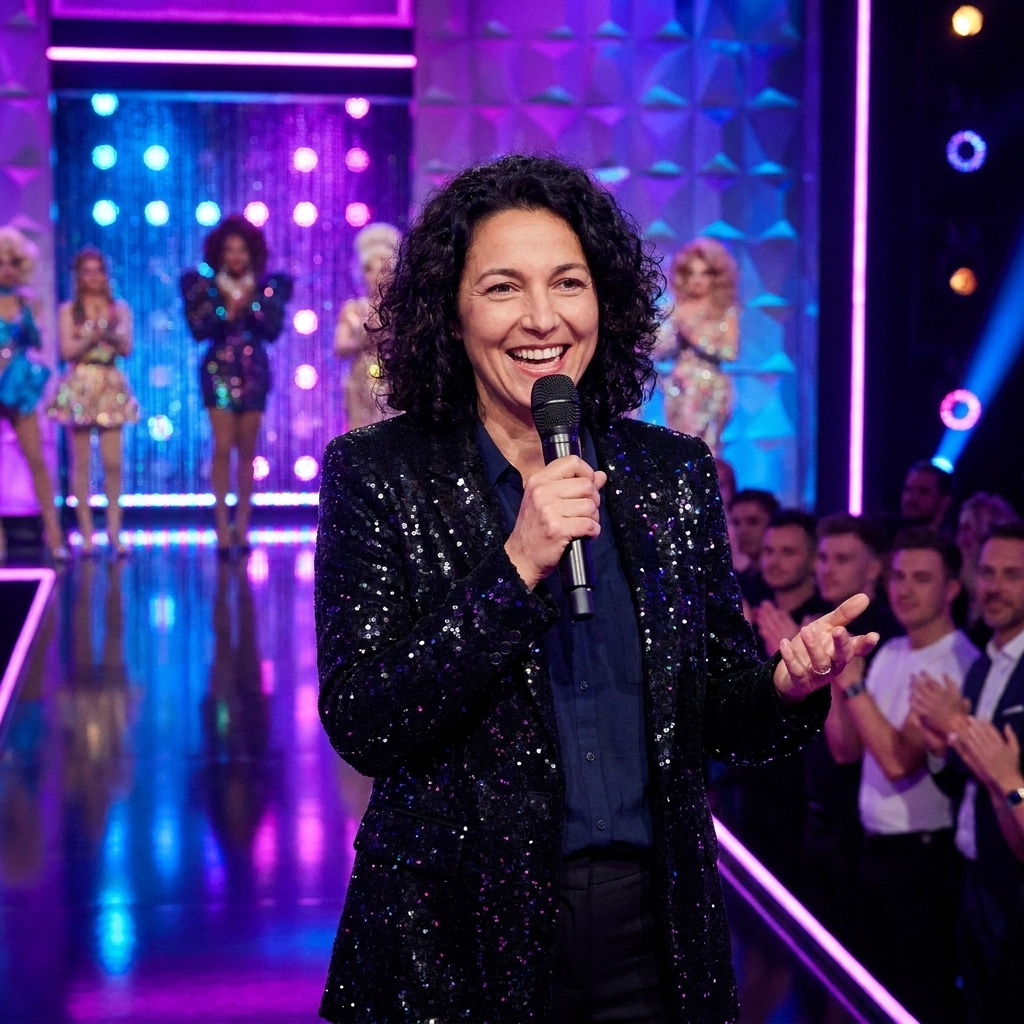
RuPaul’s Drag Race has done something rare: it helped popularize a mix of drag community language, ballroom-adjacent phrasing, and show-specific catchphrases into everyday internet speech. Many of these terms predate the series and circulate independently. The show acted like a megaphone, and sometimes like a remix machine.
Either way, the context that matters most is performance. Drag Race slang is about being seen, being judged, being witty under pressure, and choosing camp over discomfort.
“Sashay away”
On the show: The elimination line, delivered with ceremony. It’s final, but it’s also theatrical.
Online: A humorous dismissal. It can be playful (telling your friend to log off and go to bed) or pointed (telling a bad take to exit the timeline).
- “If you don’t like pickles, sashay away.”
- “That discourse? Sashay away.”
“Shantay, you stay”
On the show: The opposite of elimination: you earned your spot.
Online: Approval plus drama. It’s not just “yes,” it’s “yes, and I’m making it a moment.”
“Reading” and “shade”
On the show: “Reading” is a skill: a sharp critique, delivered with wit. “Shade” is subtler. It’s insult by implication, often wrapped in politeness.
Online: People use both words constantly, but the Drag Race context changes what counts. A “read” is expected to be clever, not just mean. “Shade” implies plausible deniability.
- Read (clever): “You are brave for posting that in daylight.”
- Shade (implied): “Love that for you.”
“No tea, no shade” and “spill the tea”
On the show: You’ll hear “tea” used as gossip or truth, and “no tea, no shade” used as a playful disclaimer before a statement that might land shady.
Online: Quick clarification that gets lost in meme form: “tea,” “shade,” and related phrasing have deep roots in Black queer communities, including ballroom and drag spaces. Drag Race didn’t invent them, but it helped push them into a wider mainstream vocabulary, where they can drift from their original cultural grounding.
“Serve”
On the show: To deliver a look or performance with conviction. You didn’t just wear the outfit. You sold it.
Online: “Serve” is now used for outfits, jokes, edits, photos, even a well-timed reply. The Drag Race echo is that it implies intentional performance, not accidental success.
“Charisma, uniqueness, nerve, and talent” (C.U.N.T.)
On the show: A tongue-in-cheek acronym that frames star quality as a checklist, while also being a wink at taboo language.
Online: People reference it to praise someone’s presence, often with campy seriousness. Context matters a lot here because not every space is comfortable with the acronym itself, even when the intent is complimentary.
If you want the bigger picture of how pop culture language moves, our hub at Pop Culture collects more of these “how did that end up in my group chat?” moments.
Other reality TV pipelines
Love Island and Drag Race get quoted a lot, but they’re not the only pipelines. Housewives franchises are basically industrial-scale reaction audio. Competition shows like Survivor and Big Brother feed strategy-speak into everyday life (“alliance,” “backdoor,” “vote you out” energy). Even family-dynasty reality TV has a talent for producing lines that turn into captions.
The specifics change, but the mechanism stays the same: a high-emotion scene produces a clean, repeatable phrase, and the internet turns it into a tool.
How meaning changes
This is the part people miss: reality TV phrases don’t simply “enter the internet.” They get recast.
1) The internet flattens the plot, keeps the vibe
You might not know the episode, the season, or the backstory. But you can still recognize a vibe: rejection, triumph, disbelief, flirtation, menace, camp.
That’s why a phrase can feel usable even when you can’t place it. You’re not quoting the plot. You’re quoting the mood.
2) Irony becomes the default
Online, a dramatic line is often used for something small on purpose. That’s not “misusing” it, that’s part of the joke. The contrast is the point.
This is especially true in spaces where irony is the shared language. If that’s your world, our piece on irony in internet slang digs into why sincere and ironic uses constantly borrow the same words.
3) Catchphrases turn into tone markers
Some phrases stop being literal and start functioning like punctuation. “Sashay away” can mean “stop,” “leave,” “I’m done with this,” or “I’m teasing you.” The exact meaning is carried by context clues: who is speaking, to whom, and in what situation.
4) Platforms teach different defaults
A phrase used on TikTok often becomes a sound or a caption format. On X, it becomes a punchline. On Discord, it becomes a roleplay-ish bit between friends. The core phrase is the same, but the default tone changes.
For more on how platforms shift meanings, see How Slang Shifts on Reddit vs Twitter.
Quick checks
If you’re about to type a phrase you picked up from a clip, here are the checks I do in my head before I hit send.
- Ask: is this a compliment, a dismissal, or a joke? Drag Race language in particular can swing between affectionate and cutting depending on delivery.
- Match the intensity to the moment. Reality TV loves high stakes. If you use that intensity for something low stakes, make sure you mean it as humor.
- Notice the audience. Some phrases are safest in spaces that share the reference. In mixed-age work chats, you may want a more neutral version of the same idea. (We talk about that balancing act in Gen Z Slang at Work.)
- Don’t over-literalize it. “Read” isn’t just “be rude.” “Serve” isn’t just “look nice.” The original context includes craft, timing, and performance.
- Keep provenance in mind. If a term comes from marginalized communities, try not to use it as a punchline in spaces where those communities are mocked, minimized, or treated like content.
Mini glossary
Here’s a quick reference list you can scroll when your brain goes blank mid-thread.
| Phrase | Reality TV root | What it usually means online | Common tone |
|---|---|---|---|
| my type on paper | Love Island | Looks good in theory, but real chemistry is different | self-aware |
| pull you for a chat | Love Island | Can we talk privately (about something serious or awkward) | playful-serious |
| the ick | Dating talk (popularized by Love Island) | Sudden loss of attraction triggered by a small thing | confessional, dramatic |
| sashay away | Drag Race | Leave, stop, be gone (joking or pointed) | theatrical |
| shantay you stay | Drag Race | You’re approved, you can remain | celebratory |
| spill the tea | Ballroom and drag culture (popularized by Drag Race) | Tell the gossip or the truth | nosy-friendly |
| no tea, no shade | Ballroom and drag culture (popularized by Drag Race) | I’m about to say something shady, but I’m pretending it’s neutral | wink-wink |
| serve | Drag culture (popularized by Drag Race) | Deliver something impressively and on purpose | hype |
If you want a broader “what does this mean, in plain English?” resource, our site’s approach lives in Slang Dictionary and the context-focused deep dive Emoji Slang Dictionary: Context Changes Everything.
FAQ
Is reality TV slang the same as AAVE or queer slang?
Sometimes it overlaps, but it’s not “the same,” and the difference matters. A lot of Drag Race-adjacent language has roots in Black and Latino queer communities and ballroom culture, while reality TV often acts as a megaphone that popularizes terms far beyond their origin spaces. The most respectful move is to treat the words as culturally located, not as goofy catchphrases that appeared out of nowhere.
Why do these phrases feel funnier online than on the show?
Because online you can deploy them as contrast. The phrase brings the intensity of a runway elimination or a villa recoupling to something mundane, like a friend canceling plans. The mismatch is the joke.
What if I use a phrase and nobody gets it?
Then it becomes its own little reality TV moment: you delivered a line to the wrong audience. If you want to keep the vibe without the reference, translate the intention. “Sashay away” becomes “please stop.” “My type on paper” becomes “I should like this, but I don’t.” Same meaning, less lore required.