
In context
How Merriam-Webster Decides Internet Slang Is Real

Published · Last updated
One of my favorite moments as a community mod was watching a brand-new phrase go from “what does that even mean” to totally normal in the span of a few weeks. Someone would drop a weird little word in a comment thread. It would get repeated, remixed, memed into a catchphrase, and suddenly it was everywhere.
And then, inevitably, somebody would declare: “Okay, it’s official now. It’s in the dictionary.”
Here is the twist. For a dictionary like Merriam-Webster, “official” does not mean “viral.” It means there is enough contextual proof that the word is being used consistently, by lots of people, over time, with a meaning that can be defined without needing a full lore dump.
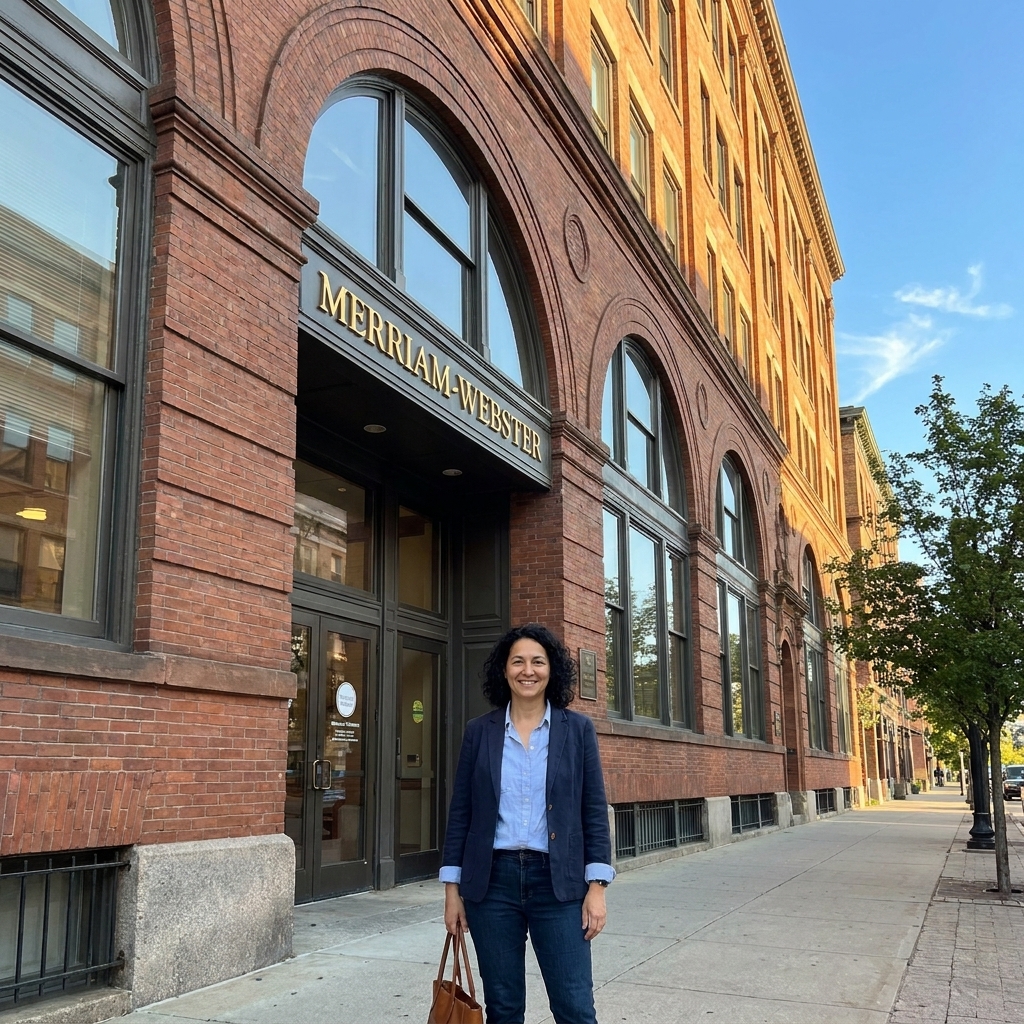
The first rule: receipts, not vibes
When internet slang gets discussed like it is a nomination for dictionary induction, people imagine a single editor making a call based on cultural intuition.
In reality, the core evidence is unglamorous and very specific: citations. In lexicography, a citation is a documented, dated example of the word used in a real source, with enough surrounding text to show what it means.
What counts as proof for slang?
- Multiple independent uses (not just one influencer’s catchphrase echoed by fans)
- Clear surrounding text where meaning can be inferred by a reader
- Repeated usage over time, not a single-weekend trend
- Usage by different people across different places, not only in one closed community
Dictionary editors are essentially doing what good mods do when a drama thread explodes: looking for patterns in how people actually use language, then documenting those patterns carefully.
Context is the real gate
Here is the part that surprises people. A dictionary does not just need the word. It needs the word in context that shows the meaning is stable enough to define.
Internet slang is especially tricky because a lot of it is:
- Tone-driven (the same word can be sincere, ironic, or insulting depending on the vibe)
- Format-dependent (a term can behave differently in captions versus replies versus Discord chats)
- Hyper-referential (it relies on knowing the meme or the original post)
Editors are not trying to capture every wink and nudge. They are trying to capture the repeatable meaning that keeps showing up even when the original context fades.
The stranger test
If you have to say, “Okay, so first you need to know this one TikTok from last summer,” the term might not be ready. But if the surrounding sentence reliably signals meaning, that is dictionary-friendly.
Viral is not the same as lasting
There’s a common misconception that if a word trends, it has earned a dictionary entry. Trending is more like a loud party. Dictionaries are more like a census.
In practice, editors often look for evidence that a word is still being used after the initial spike, and by people who are not just performing the trend.
Signals after the hype
- Longevity: Does it show up months later?
- Normalization: Is it used casually, not only as a wink at the trend?
- Spread: Does it cross platforms and communities?
- Semantic stability: Does it keep the same core meaning?
As a mod, I used to see this arc constantly: a term explodes, gets overused, becomes cringe, and then either dies or quietly survives in smaller, steadier ways. Dictionaries tend to be most interested in that second path.
Internet slang still counts
A word does not need to be “formal” to be dictionary-worthy. It needs to be used. And yes, internet-born words can qualify, especially when they start showing up outside the platform where they started.
One quick caveat that helps keep expectations realistic: different dictionaries have different scopes and update rhythms. Merriam-Webster, the OED, and various online dictionaries may prioritize different types of evidence, even when they are all tracking real usage.
On Internet Slang, we talk a lot about how terms behave in the wild, not just what they “technically” mean. If you want a quick refresher on how we approach slang that changes fast, start with our guide: Slang Dictionary.
A meaning has to be definable
Some slang works like a Swiss Army knife. It can mean ten things depending on tone, punctuation, or the facial expression you cannot see through the screen.
Dictionaries can still define these, but usually only once editors can pin down the core senses people return to again and again.
What makes a definition possible
- A consistent part of speech (noun, verb, adjective, interjection)
- A stable core meaning even if the vibe varies
- Examples that explain themselves without needing extra commentary
Think of the difference between:
- A catchphrase that only makes sense if you know the original clip
- A slang term that people can plug into new sentences and still be understood
The second one is much easier to define, and that matters more than how many likes the first one got.
Using beats quoting
This is a big one, and it is genuinely fun trivia: quoting a word is not the same as using it.
Quoted or “mention” uses can still be evidence, especially early on. But editors often treat everyday, original use as stronger proof that a term has become part of the language, not just an echo of a meme.
One clue is productivity, meaning people can:
- Use it naturally in original sentences
- Change its form (pluralize it, verb it, adjective it)
- Apply it to new situations
That is the moment a term stops being a reference and starts being a tool.

Online sources count, but quality matters
People sometimes assume dictionaries only trust books or newspapers. Modern lexicography is much more flexible than that stereotype, because language lives online.
That said, editors still care about source quality. Not in a snobby way, but in a documentation way. A solid citation usually has:
- A retrievable source
- A date (so you can track earliest use and growth)
- Enough surrounding text to show meaning
If you want the official version of Merriam-Webster’s “how we add words” approach, their explainer is worth reading: Merriam-Webster FAQ: How does a word get into the dictionary?.
Trivia: internet-shaped meanings
If you want a concrete “yes, this really happens” moment, here is a better way to think about it: sometimes the word is older, but the internet sense becomes so common that it is what most people mean.
- Meme: The word itself predates the internet, but online culture popularized the modern everyday sense of “a shareable piece of culture that spreads,” especially in image and video formats. Once people started using it in ordinary sentences without stopping to explain it, that sense became straightforward to define.
- Troll: The word has older meanings, but the internet-specific sense of “someone who posts to provoke, derail, or disrupt” became widely recognizable. You can see how definable it is by how easily it drops into headlines and everyday conversation.
The pattern is consistent: repeated, contextual, dated evidence that a meaning holds up outside the original thread.
The timeline is slower on purpose
Internet time is brutal. A term can be born, peak, and become “so last week” before you even finish your coffee. Dictionary time is intentionally slower because it is trying to capture language that will still make sense to a reader later.
That does not mean dictionaries are ignoring slang. It means they are waiting for the signal to separate from the noise.
Why slowness helps
- It reduces the chance of defining a one-week meaning that immediately flips
- It helps confirm the word is used by a broad community, not a single fandom cluster
- It allows multiple senses to emerge clearly
How slang becomes trackable
As someone who has watched phrases evolve in real communities, here’s the typical path that produces the kind of evidence dictionary editors can use:
- Seed: a term appears in a niche corner of the internet
- Signal boost: it spreads via memes, clips, reaction formats
- Meaning stabilizes: people start using it similarly across unrelated conversations
- Productive use: it gets conjugated, pluralized, adapted
- Offline leak: it shows up in everyday speech, captions, headlines, marketing copy
- Documentation stack: editors can collect citations that demonstrate the above
That “documentation stack” is the surprising part. People picture slang as chaos. Editors need it to become a pattern.
If you need to decode a term now
Sometimes you do not need Merriam-Webster to validate a term. You just need to understand what the people using it are doing with it.
If you are staring at a comment like it is written in another language, I put together a practical method here: How to Work Out Unfamiliar Internet Slang. It is basically the reader version of what editors and mods do: look for clues in surrounding text, tone, and repeated patterns.
And if you want more bite-sized culture facts like this, browse the rest of our Trivia guide.
FAQ: Internet slang in dictionaries
Does Merriam-Webster add words from social media?
Yes, they can and do. The key is evidence: consistent meaning, repeated use, and enough citations to show it is part of language, not just a momentary reference.
Do dictionaries require proper English?
No. Dictionaries describe language as it is used. Slang, informal phrasing, and internet-born terms can qualify if people use them widely and consistently.
Why isn’t my favorite slang term in the dictionary yet?
Most often it is because the term is too new, too tied to a specific meme, too unstable in meaning, or mostly appears as quoting or referencing rather than everyday vocabulary.
Is being in the dictionary the same as being real?
Not socially, no. A word can be real in the way people actually communicate long before a dictionary entry exists. Dictionary inclusion is more like a historical record that the word has proven staying power and definable meaning.
If you ever want to feel slightly better about not keeping up with new slang, remember this: even professional lexicographers need piles of context before they call a word “official.” The internet makes new language fast, but proof takes time.
That is not gatekeeping. That is just how you turn chaos into a definition.