
In context
Twitch and Discord Slang, Decoded

Published · Last updated
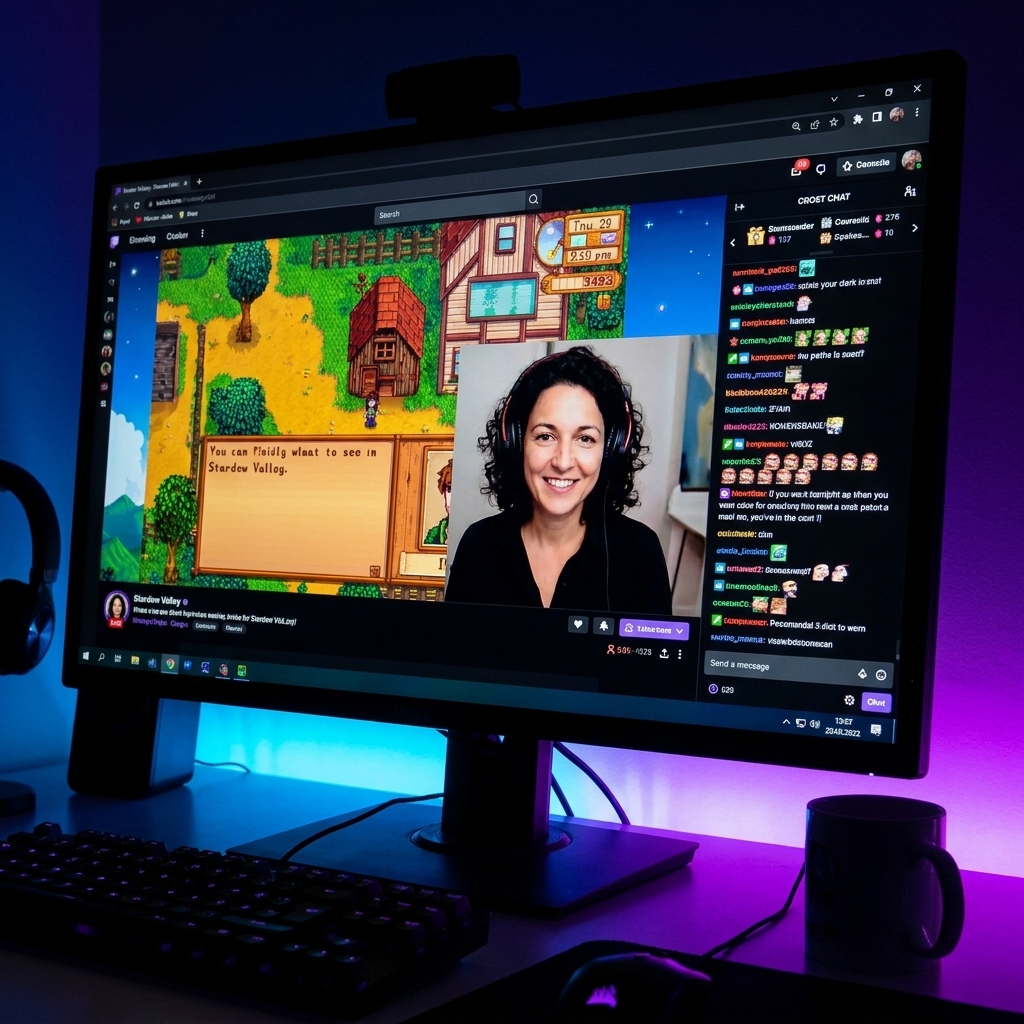
I learned early on as a community mod that the fastest way to start a fight is to assume everyone means the same thing by the same word. Gaming chat makes that lesson feel like a speedrun. On Twitch and Discord, slang is not just vocabulary. It is a live commentary track that can change meaning depending on the match, the mood, and whether the person typing just got deleted off spawn.
This is your decoder for common Twitch and Discord slang, with an emphasis on the part people miss: context. If you want the bigger picture of how we handle definitions on this site, our Slang Dictionary guide explains the approach.
Why meanings shift fast
In most everyday conversation, a word has a fairly stable meaning. In gaming spaces, a word often means: “this is what that play felt like to me.” That is why you will see the same term used as:
- an on-the-spot description (that was a clean outplay)
- a vibe check (the lobby feels intense)
- a moral judgment (you tried too hard, or not hard enough)
- a coping mechanism (I did not lose, I got “cheesed”)
So when you see “cracked” or “throwing,” do not just translate the word. Look for the trigger: a clutch, a misplay, a teammate decision, or a streamer reacting to chat.
The gamer’s dictionary
These are some of the most common terms you will see in Twitch chat and Discord, plus how to tell what the speaker actually means in the moment.
Sweaty
Core meaning: Trying very hard, usually in a way that makes the match feel intense.
What it implies: “This is not casual anymore.” It can be admiration, complaint, or playful shade.
- Admiring: “That team is sweaty” meaning they are disciplined and coordinated.
- Complaining: “So sweaty for no reason” meaning it feels like ranked energy in a casual mode.
- Self-aware: “Sorry I’m sweating” meaning I’m locked in.
Context clue: If it is said after a tight win or a high-skill outplay, it skews toward respect. If it is said after getting stomped, it skews toward salt.
Cracked
Core meaning: Playing insanely well, with fast reactions and confident mechanics.
Common variations: “He’s cracked,” “actually cracked,” “cracked out.”
Context clue: Look for a highlight moment: a flick, a triple kill, a flawless combo, a perfect rotate. In some shooters, “cracked” is also used as a literal callout for broken armor or shields (for example, in Apex Legends). If chat says “cracked” right as someone’s shield breaks, it may be the callout, not praise.
Throwing
Core meaning: Making choices that cause a loss, often when the team had a real chance to win.
Range of severity: It can mean anything from “unlucky mistake” to “you basically handed them the game.”
- Light: “I’m throwing” after a whiffed ult.
- Accusatory: “Stop throwing” when someone keeps taking bad fights.
- Strategic: “We threw that round” meaning a late-game misplay changed the outcome.
Context clue: If the tone is joking and the person says it about themselves, it is usually venting. If it is directed at a teammate repeatedly, it can escalate into blame culture fast.
Diff (and role diffs)
Core meaning: One side had a clear advantage in a particular role or position.
Examples: “Jungle diff,” “tank diff,” “DPS diff.”
What it’s doing socially: Assigning responsibility. Sometimes it is a real observation. Sometimes it is shorthand for “I don’t want to talk about what I did.”
Context clue: If it appears right after a loss, it is often blame. If it appears after a dominant performance with receipts (stats, clips, obvious impact), it is more descriptive.
Gap
Core meaning: A noticeable skill difference. Similar to diff, but broader.
Context clue: “Huge gap” tends to show up when the outcome felt inevitable, not just close-but-lost.
Inting / Int
Core meaning: Originally “intentionally feeding” (from League of Legends), now often used more loosely for reckless play that looks intentional.
Context clue: If someone keeps overextending or taking doomed fights, teammates may call it inting even if it is not literally on purpose. Watch for sarcasm: “Nice int” can mean “that was a terrible decision,” not a serious accusation of sabotage.
Griefing
Core meaning: Ruining the game experience for others on purpose, often through trolling, refusal to cooperate, or disruptive behavior.
Difference from throwing: Throwing can be accidental or a single mistake. Griefing implies intent, pattern, or behavior designed to frustrate.
Context clue: If someone says “he’s griefing” because a teammate picked an off-meta character, that is often exaggeration. If someone is body-blocking, team-killing (where possible), or sabotaging objectives, it is closer to literal.
Rat / Ratting
Core meaning: Playing safe and sneaky to survive or gain placement, often by hiding, third-partying, or avoiding fights.
Context clue: In battle royale and extraction-style games, ratting can be smart strategy. In other contexts, it is used as an insult for “cowardly” or “uninteractive” play. The same move can be called “ratting” with respect (smart) or disdain (annoying) depending on who benefited.
Third-party
Core meaning: A new team jumps into a fight between two teams, usually to clean up easy kills.
Context clue: If chat says “we’re getting third-partied,” it is a warning. If they say “third-party this,” it is a strategy call.
Clutch
Core meaning: Winning a situation you were expected to lose, often late-round or outnumbered.
Context clue: “Clutch” often comes with time pressure, low health, or a 1vX scenario. If the streamer stays calm and chat explodes afterward, that is textbook clutch.
Choke
Core meaning: Failing a winnable moment due to nerves, misexecution, or panic.
Context clue: Choking is usually tied to expectations. If the player is known as strong and then fumbles an easy finish, the word appears instantly.
Sus
Core meaning: Suspicious. Popularized massively by social deduction games, now used everywhere.
Context clue: On Discord, “sus” can be playful flirting, teasing, or a real accusation depending on the server culture. If you are unsure, scan the next two messages. Someone usually clarifies with a joke or a direct callout.
Copium / Hopium
Core meaning: “Copium” is joking about coping with disappointment. “Hopium” is joking about optimism that might be unrealistic.
Context clue: You will see it when people defend a shaky strategy, predict a comeback, or rationalize a bad patch. It is less about being correct and more about acknowledging feelings while keeping it funny.
GG / GGs / GG go next
Core meaning: “Good game.”
How tone changes it: GG can be sincere, polite, or extremely sarcastic.
- Sincere: Close match, mutual respect.
- Resigned: “GG go next” meaning stop dwelling, queue again.
- Sarcastic: After a stomp or obvious throw.
W / L (and “common W”)
Core meaning: W = win, good, based. L = loss, bad, embarrassing.
Context clue: On Twitch it is often instant reaction: “W play” after a smart push, “L” after a misclick. On Discord it can be more personal, like judging an opinion: “common W take.”
Pog / Poggers
Core meaning: Hype, excitement, “that was sick.”
Context clue: It shows up most when something surprising happens (lucky drop, insane shot, plot twist). In some chats it is less common than it used to be, but it still reads as upbeat reaction slang.
Kappa
Core meaning: A classic Twitch sarcasm marker, basically “I’m kidding” or “read this as ironic.”
Context clue: If a message seems too harsh or too confident, “Kappa” at the end often flips it into a joke. Without it, the same sentence can start drama.
NPC
Core meaning: Calling someone repetitive, brain-off, or copy-paste in how they talk or play.
Context clue: Sometimes it is light roasting (“he’s on NPC pathing”), sometimes it is an actual insult. If it is aimed at a specific person in a small Discord, it tends to land sharper than it does in a fast Twitch feed.
Buff / Nerf
Core meaning: Buff = make stronger. Nerf = make weaker.
Context clue: People use it seriously for patch talk, but also as a meme about anything that feels unfair: “Nerf that gun,” “Buff my RNG,” “Nerf this lobby.”
Carry / Hard carry
Core meaning: One player is doing the work that decides the outcome. “Hard carry” turns it up to “we would lose without them.”
Context clue: If chat is praising a streamer, it is often “carry” as admiration. If teammates are salty, “must be nice getting carried” can be a dig.
Backseating
Core meaning: Unwanted advice or play-calling from viewers.
Context clue: In Twitch chat, “no backseating” is often a hard boundary. In Discord with friends, backseating can be normal, so the same callout can read either as a reminder or as irritation.
How I decode chat fast
When a Twitch chat is flying, I translate it the same way I used to moderate heated threads: not word-first, but situation-first.
1) Identify what just happened on screen
- A clean outplay often triggers “cracked,” “insane,” “diff.”
- A single catastrophic error triggers “throwing,” “choke,” “int.”
- A slow, evasive strategy triggers “rat,” “boring,” “uninteractive.”
2) Clock who is speaking and who they’re loyal to
On Twitch, chat is often aligned with the streamer, but not always. Hate-watchers, backseaters, and rival-fandom drive-bys are real. On Discord, people may be aligned with their duo, their role, or the server’s in-jokes. The same word can be banter inside a friend group and hostility in a pickup squad.
3) Look for stacking phrases
People pile on words when emotion is high. “Actually cracked” usually means awe. “Literally throwing” usually means frustration. Repetition is a tell, too: “sweaty sweaty sweaty” is someone processing intensity in the moment.
4) Check if it’s tactical slang or moral slang
- Tactical: “Third-party,” “rotate,” “ult,” “cracked” (armor). These are often descriptive.
- Moral: “Sweaty,” “rat,” “tryhard,” “toxic.” These are often judgments about how someone “should” play.
If you want a broader set of context-reading tools, I keep a step-by-step breakdown at Work out unfamiliar internet slang. It applies really well to gaming chat because the same principles hold: who said it, where, and after what.
Mini transcripts
Here are a few quick scenes that show why translation without context gets you in trouble.
“Sweaty” as respect
Streamer: “Okay that was clean.”
Chat: “SWEATY lobby” “they’re good” “ranked energy”
Translation: That team is organized. Everyone had to lock in.
“Sweaty” as complaint
Streamer: “I just wanted a warm-up game…”
Chat: “why is it so sweaty” “touch grass”
Translation: The match feels more intense than the vibe they wanted.
“Cracked” as praise
Streamer: “Watch this peek.”
Chat: “CRACKED” “ACTUALLY CRACKED” “hands diff”
Translation: They just hit something mechanically nasty.
“Cracked” as a callout
Teammate (voice or Discord): “He’s cracked!”
Other teammate: “Push, push.”
Translation: In some shooters, that means the enemy’s shield is broken, not “that player is amazing.”
“Throwing” as self-roast
Streamer: “Noooo I missed.”
Chat: “LOL throwing” “we all saw that”
Translation: Light teasing. Not an accusation of griefing.
“Diff” as blame
Discord teammate: “mid diff, report”
Translation: They’re assigning responsibility for the loss to a role, whether fair or not.
Common misunderstandings
Assuming slang is always an insult
Terms like “sweaty,” “rat,” and “toxic” can be insults, but they can also be playful shorthand among friends. If the server is full of heart reactions and laughing responses, the word is probably doing social bonding, not harm.
Assuming slang is always literal
“Inting” is a big one. In modern chat, it often means “that looked terrible,” not “you intentionally sabotaged us.” Treat it like a tone word unless there is a clear pattern of malicious behavior.
Mixing up platform norms
Twitch chat loves hyperbole because it is performance. Discord is more persistent and personal, so the same hyperbole can land harsher. Something that flies by in a Twitch feed might sting in a smaller Discord channel where people know each other.
If you’re bouncing between gaming slang and broader internet language, our guide on how to read slang with context clues is built for exactly that skill transfer.
Quick FAQ
Is “sweaty” the same as “tryhard”?
Close, but not identical. “Sweaty” is more about the feeling of intensity. “Tryhard” is more judgmental and implies you are trying too much for the setting.
Is “cracked” always a compliment?
Usually, yes. The main exception is when it is being used as a literal callout for broken armor or shields in some shooters.
Does “throwing” mean they did it on purpose?
Not necessarily. People use “throwing” for accidental mistakes all the time. If they mean intent, you will often see “griefing” or “trolling” instead.
How do I respond if I do not know what a term means?
On Twitch, it is often easiest to watch the next play or two and let context teach you. On Discord, a simple “what does that mean here?” works better than guessing. Every server has its own micro-dialect.