
In context
When Pop Culture Misuses Therapy Speak

Published · Last updated
I have moderated enough celebrity-fandom blowups to know this pattern by heart: someone posts a screenshot, captions it “gaslighting,” and within three comments the thread is basically a courtroom drama where everyone is also suddenly a therapist.
Therapy language going mainstream is not automatically bad. A lot of people found words for their experiences because mental health conversations became more public. The problem is that pop culture and gossip cycles reward speed and spectacle, not precision. So clinical terms get stretched until they mean “I didn’t like that,” and then we are all arguing about the word instead of the behavior.
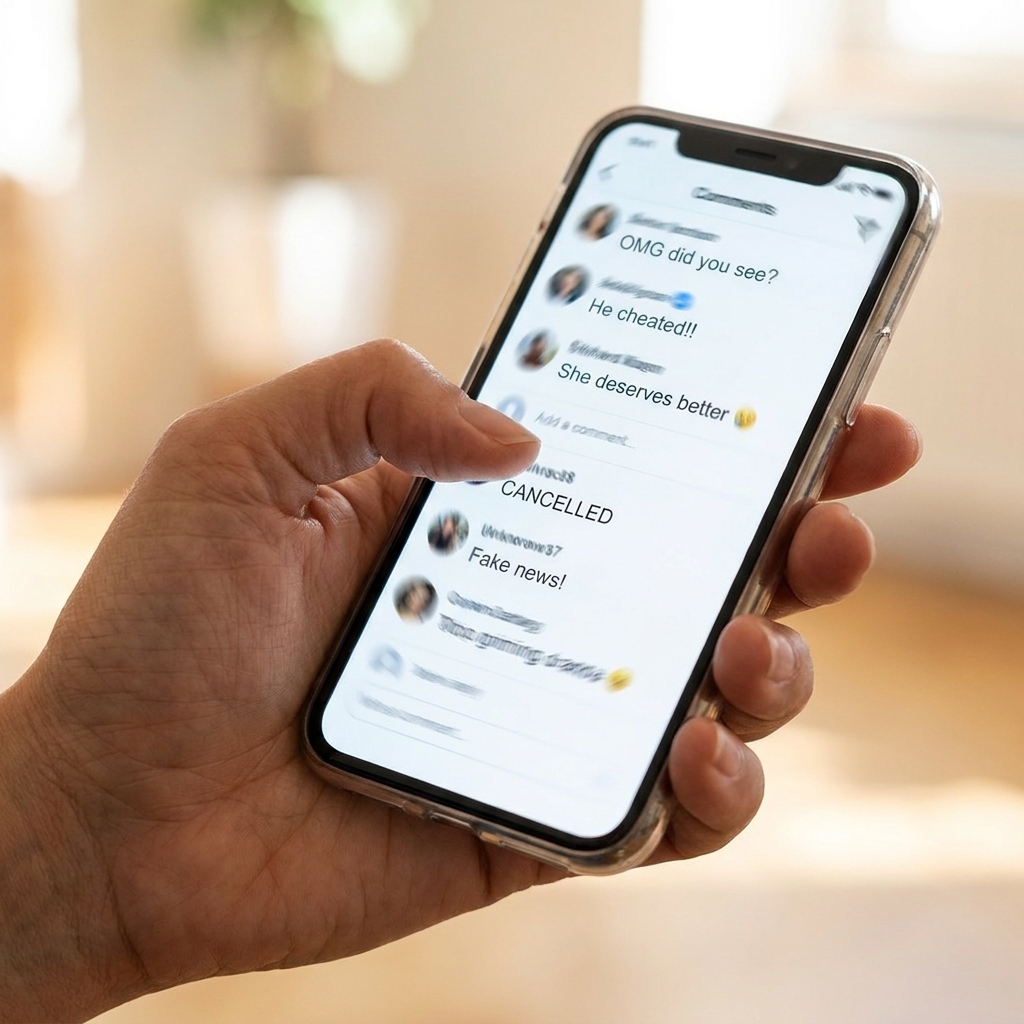
What therapy speak is online
Online, “therapy speak” usually means clinical or therapy-adjacent terms used in everyday conversation. Sometimes it is accurate. Often it is a shortcut that sounds authoritative, especially in pop culture spaces where being the first person to label the villain matters.
You will see it in:
- Celebrity gossip: labeling a messy breakup as “narcissistic abuse” based on one interview clip.
- Stan disputes: calling a disagreement “emotional labor” or “triggering” without explaining what harm happened.
- Reality TV recaps: diagnosing cast members and turning boundaries into punchlines.
A common tell is certainty without context. Many of these terms were built to describe patterns, power, and impact over time. Gossip content is usually a highlight reel.
If you want a broader “context-first” approach to internet language, this site’s guide on reading clues beyond the word itself is a good companion: Work Out Unfamiliar Internet Slang.
Why pop culture waters terms down
1) The algorithm loves a label
“They had a conflict” gets ignored. “That is gaslighting” gets clicked, quoted, stitched, and turned into ten slides.
2) Labels can make a messy story feel settled
In fandom arguments, a clinical label can act like a trump card. Instead of “I think that was unfair,” it becomes “This is abuse,” and now anyone disagreeing looks immoral.
3) Boundaries get turned into weapons
People start using “I am setting a boundary” to mean “You cannot criticize me,” even when they are in a public-facing conflict. Real boundaries define what you will do next. They can include consequences, too, like “If you keep yelling, I am leaving,” but they are not a magic spell that forces other people to comply.
4) Severity collapses
When “trauma” becomes a catch-all for discomfort, it gets harder to communicate clearly about traumatic stress and real symptoms.
Clues a term is being misused
When I am reading a spicy thread, I do a quick mental check for these signals:
- One moment is being treated like a diagnosis. A single “we never said that” is not automatically gaslighting.
- The word replaces evidence. If a post is mostly labels with very little description, be cautious.
- No pattern is established. Many of these concepts point to repetition and escalation, not one-off mess.
- Power and control are missing where they matter. For terms like gaslighting and abuse, who has leverage and who is vulnerable changes the whole read.
- The goal is punishment, not understanding. If the label is mainly used to justify dogpiling, that is a social move, not mental health literacy.
- People argue about the label more than the behavior. That is often a sign the term is doing the heavy lifting.
For more on why “meaning” changes across communities, this piece on platform shifts is worth reading: How Slang Shifts on Reddit vs Twitter.
Commonly misused terms in gossip
Gaslighting
Clinical idea, simplified: a pattern of manipulation where someone tries to make you doubt your perception of reality. It often involves a power imbalance, and it can show up alongside other control tactics, but it is not limited to one single “gotcha” lie.
How pop culture often uses it: “They lied,” “They denied,” or “They are spinning the story.”
Context questions to ask:
- Is this a pattern or a single contradiction?
- Is the person trying to make someone question their memory or sanity, or are they just saving face?
- Is there ongoing leverage, dependency, or intimidation involved, or is this a standard PR mess?
Better everyday phrasing when it is not clinical gaslighting: “They are contradicting themselves,” “They are rewriting the timeline,” “That feels manipulative,” “That is dishonest.”
Boundaries
Clinical idea, simplified: a limit you set on what you will accept and what you will do next. A boundary is anchored in your actions, and it can include a consequence.
How pop culture often uses it: “You are not allowed to ask questions,” “Stop talking about this,” or “I get to do whatever I want now.”
Context questions to ask:
- Did the person state what they will do, or did they issue a rule for everyone else?
- Is the boundary consistent, or does it only appear during backlash?
- Does it protect safety and wellbeing, or is it dodging accountability?
Better everyday phrasing: “I am not discussing that,” “I am stepping back,” “If this continues, I am leaving.”
Trauma and triggering
Clinical idea, simplified: trauma is not just something upsetting. It is an experience that can overwhelm coping systems and create lasting symptoms. A trigger is a cue that can set off a trauma response.
How pop culture often uses it: “That was cringey,” “That annoyed me,” “I hated that episode,” “This celebrity is my trigger.”
Context questions to ask:
- Is the person describing symptoms and dysregulation, or just strong dislike?
- Are they asking for content warnings, or trying to shut down conversation?
Better everyday phrasing: “That is upsetting for me,” “That topic is sensitive,” “I cannot watch that.”
Narcissist and narcissistic abuse
Clinical idea, simplified: narcissistic traits exist on a spectrum. Narcissistic Personality Disorder is a diagnosis. “Narcissistic abuse” is a contested term because it is not a formal diagnosis category and it is used inconsistently online, often to describe emotional abuse with a certain flavor.
How pop culture often uses it: “My ex is selfish,” “That influencer is arrogant,” “This reality star loves attention.”
Context questions to ask:
- Are people describing specific abusive behaviors, or just unpleasant personality traits?
- Are they using “narcissist” as a stand-in for “person I dislike”?
Better everyday phrasing: “self-centered,” “controlling,” “emotionally abusive,” “manipulative,” depending on what actually happened.
Love bombing
Clinical idea, simplified: intense attention and affection used to accelerate intimacy and create dependency, sometimes followed by devaluation or control.
How pop culture often uses it: “They posted a cute couple photo,” “They are being extra romantic,” “He sent flowers.”
Context questions to ask:
- Is there pressure for commitment, isolation, or rushed escalation?
- Is the affection paired with guilt, control, or punishment later?
Better everyday phrasing: “moving too fast,” “performative,” “overwhelming,” “inconsistent.”
Emotional labor
What it means in plain terms: the work of managing emotions and social dynamics, including the invisible effort of smoothing conflict, anticipating needs, or carrying the “relationship maintenance” load.
How pop culture often uses it: as a fancy way to say “you made me uncomfortable” or “I had to read your post.” Sometimes it also gets used to mean “I do not want to explain myself,” which can be valid, but it is not always the same thing.
Context questions to ask:
- Is someone being asked to do ongoing caretaking or education they did not consent to?
- Is there an imbalance where one person is always calming, translating, and absorbing the fallout?
- Or is this just a normal disagreement where both sides are annoyed?
Better everyday phrasing: “I do not have the bandwidth to talk about this,” “I am not the right person to educate you,” “This conversation feels one-sided.”

A quick translation trick
When you see a post like “He is gaslighting her,” do this:
- Step 1: Replace the term with a plain description: “He is lying and trying to make her look unreliable.”
- Step 2: Ask if the plain description still holds with what you actually saw.
- Step 3: Decide whether the clinical term adds clarity or just adds heat.
If swapping to plain language makes the claim sound inflated, that is a hint the label may be doing too much work.
When therapy speak helps
Some online uses are genuinely helpful, especially when they:
- Describe patterns, not vibes. “This person repeatedly punishes me when I say no” is different from “He is toxic.”
- Center impact without diagnosing strangers. “That dynamic seems controlling” tends to be safer than “He is a narcissist.”
- Make room for nuance. Pop culture encourages teams and villains. Real people can be both harmed and harmful in the same story.
This also connects to how irony and exaggeration work online. Sometimes people deploy therapy words half-seriously as a bit. If that is your universe, you will probably enjoy: Irony in Internet Slang.
When to take it seriously
One thing I try not to lose in the discourse: sometimes a commenter is not playing. If someone is describing fear, isolation, threats, coercion, or a trauma response, you do not have to litigate whether their wording is perfect.
A responsible middle ground is to respond to the impact, ask what support they need, and avoid diagnosing the alleged person based on a clip. You can be kind without turning a comment section into a group therapy session.
What to say instead
You can call out bad behavior without turning your comment into a diagnosis. A few swaps I see work well in heated threads:
- Instead of gaslighting: “contradicting the receipts,” “denying what happened,” “spinning the narrative.”
- Instead of triggering: “hard to watch,” “sensitive topic,” “brings up a lot for me.”
- Instead of boundaries (when it is really a demand): “request,” “preference,” “rule,” “ultimatum.”
- Instead of trauma (when it is really discomfort): “stressful,” “painful,” “upsetting,” “humiliating.”
- Instead of narcissist: “self-centered,” “image-obsessed,” “dismissive,” “cruel,” “controlling.”
- Instead of emotional labor (when it is really annoyance): “That is a lot to deal with,” “I do not want to argue about this,” “This conversation is draining.”
Examples without diagnosis
Because this is where people get stuck, here are a few common gossip scenarios and a more context-faithful read:
Scenario: A celeb denies a quote that is on video
Hot take: “Gaslighting!”
More accurate read: “They are lying or doing damage control.” That can be manipulative and still not match the longer-term pattern people often mean when they say gaslighting.
Scenario: An influencer says “I am setting boundaries” after backlash
Hot take: “Weaponizing therapy speak.”
More accurate read: Ask what the boundary is. “I am logging off for my mental health” is a boundary. “No one is allowed to discuss this public sponsorship” is more like trying to control conversation.
Scenario: A stan says “Stop demanding emotional labor” during a disagreement
Hot take: “You owe me emotional labor!”
More accurate read: Sometimes that means “Please stop asking me to keep explaining basics you could look up.” Sometimes it means “I do not want to defend my claim.” The difference is whether there is an ongoing expectation that one person will educate, soothe, and absorb the mess for everyone else.
Scenario: A reality star cries and says they are “traumatized” by a rude castmate
Hot take: “Stop using trauma for everything.”
More accurate read: On reality TV, heightened language is part of the format. They might mean “I was deeply embarrassed” or “I feel unsafe in this group.” You can critique the exaggeration without policing someone’s inner life.

Argue behavior, not vocabulary
If you are in a comment thread and want to keep it from becoming a semantics cage match, try anchoring on specifics:
- Name the action: “They shared private messages.”
- Name the pattern: “This happens every time they get criticized.”
- Name the impact: “It pressures fans to pick sides and dogpile.”
- Skip the diagnosis: you can be sharp without being clinical.
And if the conversation is happening across platforms, remember each platform has its own “default tone.” A phrase that reads as deadly serious on one app can be semi-ironic on another. If you want a TikTok-specific lens, start here: How to Read TikTok Slang With Context Clues.
FAQ
Is it wrong to use therapy terms casually?
Not automatically. Language evolves. The issue is when casual use erases meaning or turns clinical terms into weapons for winning arguments.
How can I tell if someone means it literally or as slang?
Look for detail. Literal use usually includes patterns, time, and impact. Slang use often appears as a standalone label with minimal explanation, especially in screenshots-and-caption formats.
Is “gaslighting” ever okay to say about celebrities?
It can be, but it is worth being careful. Public figures can absolutely be abusive. The problem is that we often only see curated clips. If you do not have enough of the pattern, it may be more accurate to describe the behavior you can actually verify.
Why do these words spread so fast?
They are compact, emotionally loaded, and socially useful. A single term can signal “I know the playbook” in a community. That is powerful in fandom spaces.
Kindness and skepticism
I try to hold two things at once: people are often reaching for language that helped them understand their own lives, and pop culture spaces are not exactly known for careful definitions.
If you treat therapy terms like you would any other internet slang, meaning comes from context, tone, and the social goal of the post. Once you start looking for those clues, you will get better at telling the difference between a real description of harm and a trendy label used for dramatic effect.
If you are new around here, you can browse more culture decoding in Guide: Pop Culture, and if you want the broader vocabulary side, the Slang Dictionary guide is a good place to wander next.