
In context
Ballroom, AAVE, and the Internet: Why Context Matters

Published · Last updated
I learned to read a comment section the way you learn to read a room. I spent years moderating pop culture and gaming communities, and the same pattern showed up over and over: the biggest blowups rarely came from “bad words.” They came from words used out of context.
One of the most common spirals looked like this: someone drops a phrase they picked up from a meme, another person reads it through a different cultural lens, and suddenly the thread is a debate about “tone,” “respect,” and “why are you so sensitive.” Nobody thinks they started the fire. Everybody thinks they are responding to it.
That is especially true for slang with roots in Black communities and LGBTQ+ communities, including ballroom culture and African American Vernacular English (AAVE). A lot of today’s most “everywhere” internet phrases traveled a long route before they hit TikTok captions and brand accounts. When you know where a phrase comes from, you not only understand what it means, you understand what it is doing.
What “origins” means online
When people say “that word came from ballroom” or “that is AAVE,” they often mean one of three different things:
- Origin: the phrase was coined or popularized inside a specific community.
- Transmission: the phrase spread outward through music, TV, clubs, forums, Vine, Twitter, TikTok, or reaction GIF culture.
- Meaning shift: the phrase got diluted, remixed, or flattened once it reached a broader audience.
Online slang moves fast, but it is not random. It follows networks of people, platforms, and pop culture moments. And because a lot of our online language is performative, meaning we use it to signal identity, vibe, and belonging, the “who” and “where” matter.
Ballroom culture: language as performance
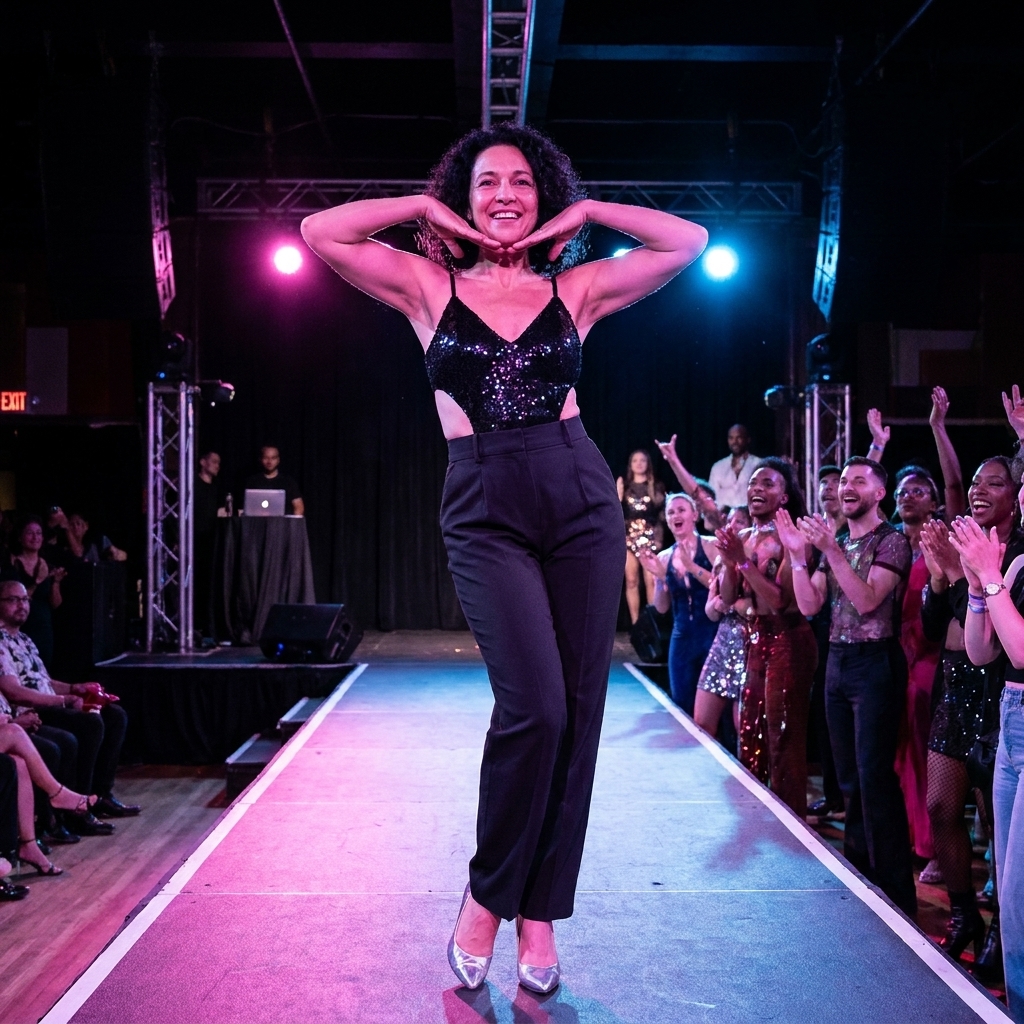
Ballroom culture grew primarily out of Black and Latinx LGBTQ+ communities, especially in New York City, as a space for competition, creativity, and chosen family. The language of ballroom is not just vocabulary. It is part of a whole performance system: reading, judging, praising, shading, and surviving.
Many phrases that feel like generic “sassy internet talk” make more sense when you remember they were built for specific settings: a runway, a category, a battle, a moment where words are part of the sport.
Words that traveled from ballroom into mainstream slang
Not every usage you see online is “incorrect,” but a lot of it is missing the original function. Here are a few common travelers, with context notes:
- Serve: In ballroom and adjacent performance spaces, serving is delivering a look, a performance, or a category with control. Online, “you served” can still mean that, but it sometimes gets watered down to “nice outfit.” Context tells you whether it is praise for execution or just a compliment.
- Shade: Shade is not simply “being mean.” It is a stylized, often witty form of indirect insult. Online, people call any insult “shade,” which misses the craft element.
- Read: A read is a direct, pointed critique. In ballroom, reading is often performative and patterned, and it can have its own rhythm depending on the room. Online, “read” often becomes “clapback,” but the original energy is closer to a performance of truth telling.
- Werk: “Werk” is widely associated with drag and ballroom influence, and you will hear it used as a hype command to keep going. It also connects to broader roots (plain “work,” Black and queer performance spaces, and later pop culture). Online, it can mean anything from “good job” to “I am thriving,” but the point is still amplification.
If you want a pop culture bridge for ballroom language, reality TV did a lot of carrying. It is worth seeing how those moments get clipped, captioned, and re-captioned as they move platform to platform. For more on how reality TV slang gets repurposed, see From Love Island to RuPaul: Reality TV Slang in the Wild.
AAVE: a real dialect
AAVE is a rule-governed dialect with its own grammar, syntax, and long history. Online, it is often treated like a vibe or a grab bag of punchy phrases. That flattening is where misunderstandings start.
Why AAVE gets mislabeled as “Gen Z slang”
AAVE shows up in music, comedy, Black Twitter, streaming culture, and everyday speech. When the internet copies what is catchy, people outside the community can start thinking the dialect itself is just trendy language. Then the cycle repeats: a phrase gets popular, gets misused, gets called “cringe,” and gets replaced by the next one.
Context clues that AAVE grammar is at work
Not every viral phrase is AAVE, and not every Black creator is using AAVE at all times. But some patterns are worth recognizing because they change meaning.
- Habitual “be”: “He be doing that” signals something habitual, not necessarily happening right now.
- Stressed “BIN/been”: often signals a long-standing state or something that started in the remote past (in speech, the stress is part of the meaning).
- Completive “done”: can mark that something is already completed, with a different feel than a simple past tense.
- Meaning built through tone: irony, play, and emphasis can flip a phrase from praise to side-eye fast.
My moderation brain always wants to say this plainly: if you copy the surface words without copying the rules and tone, you will often sound off. And if you only copy AAVE when you want to sound funny, aggressive, or “sassier,” you are also copying stereotypes.
How slang goes mainstream
Most internet slang does not spread evenly. It tends to move through a few repeat pipelines:
- Clips and reaction culture: a short moment becomes a GIF, then a reply template, then “how people talk.”
- Platform migration: a phrase can mean one thing on Twitter, another on TikTok, and a third in a Discord server. If you want a deeper look at platform drift, read How Slang Shifts on Reddit vs Twitter.
- Commercial adoption: brands copy what performs, usually without the cultural guardrails. The result is often awkward at best and exploitative at worst. There is a whole genre of this in Brand Fails and Slang.
When slang goes mainstream, two things often happen at once: more people feel invited to play with language, and the original communities lose control of how their language represents them.
Is it appropriation if I say it?
This is the part people want to reduce to a simple yes or no. Real life is more specific. Here are context questions I use, both as a writer and as someone who has had to calm down a thousand threads.
1) What is your relationship to the community?
Language is relational. If you are part of the community that built the term, your use sits differently than if you are borrowing it as an accessory. If you are not part of that community, it does not mean “never,” but it does mean “be mindful.”
2) Are you quoting, code-switching, or borrowing?
These are not the same thing. Quoting a lyric or repeating a viral sound is usually recognizable as a quote. Code-switching is a lived, situational language shift, not a costume. Borrowing is when a phrase becomes part of your default voice, and that is where people tend to run into “Why are you talking like that?” territory.
3) Are you using it to perform a persona?
A lot of appropriation is not about a single word. It is about using a dialect to cosplay an attitude: tougher, funnier, more sexual, more “real.” That is where harm tends to show up.
4) Are you using it in the right setting?
Some phrases are casual among friends and jarring in professional settings. If you have ever watched a Slack message go sideways, you know what I mean. Context at work is its own beast, and I broke down some of those tone issues in Gen Z Slang at Work: Slack and Email Context.
5) Who gets punished for it?
This is the question people skip. If Black creators are labeled “unprofessional” for a speech pattern while everyone else gets called “funny” or “relatable” for copying it, that is the inequality in action.
Mini glossary: same word, different meanings
Here is a quick way to spot context shifts. The goal is not to police language, it is to understand what you are actually saying.
| Word or phrase | Community context | Common mainstream internet use | What gets lost |
|---|---|---|---|
| shade | stylized, witty, indirect insult | any insult or negativity | craft, play, social rules |
| read | direct critique, performed with precision | clapback, dunking | structure, artistry, intent |
| serve | deliver excellence in a category or look | general compliment | standards, competition energy |
| period | verbal punctuation to end debate | caption filler or emphasis | finality, boundary setting |
| be | marks a habitual action or state | typed for emphasis without the habitual meaning | the time and frequency signal |
Decode slang respectfully
If you are reading a comment and something feels slightly off, try a quick context check before you assume someone is being rude or before you copy the phrase yourself.
- Look for the source vibe: is this coming from drag, ballroom, Black Twitter, fandom, or gaming chat? Each has different norms.
- Check the format: a phrase in all caps in a reply chain is not the same as the same phrase in a formal email.
- Watch the audience: who is laughing, who is correcting, who is uncomfortable? Communities signal boundaries fast.
- Notice tone markers: sarcasm and play can be hard to read. Tone indicators can help, and I have a full explainer here: Tone Indicators /s, /j, and Instant Context.
If you want a broader method for decoding unfamiliar phrases without spiraling, I also keep a practical checklist in Work Out Unfamiliar Internet Slang.
Give credit without making it weird
A lot of people want to do the right thing and then get stuck on how to acknowledge origins without sounding like a walking footnote. You do not have to narrate a dissertation every time you say “slay.” But you can practice a few habits that tend to land well:
- Do not correct people performatively. If someone is genuinely asking, share info. If someone is just using a word casually, public scolding rarely educates.
- Resist “credit as a gotcha.” Origins are not ammunition for dunking. They are context for understanding.
- Support creators, not just catchphrases. If you love the language, engage with the culture and art that shaped it.
- Be careful with caricature. Quoting a phrase while mimicking a stereotype accent or “sass voice” is where things get ugly fast.
FAQ
Is all internet slang AAVE?
No. The internet pulls from everywhere: fandoms, gaming, disability communities, regional dialects, immigrant communities, and yes, AAVE and ballroom. The issue is that AAVE gets disproportionately labeled as “just internet slang” once it goes mainstream.
Did ballroom invent every “sassy” phrase?
No. Ballroom is a major source for certain phrases and performance styles, and it has had a huge impact on pop culture. But language is messy: phrases can have multiple roots, and mainstream media can blend sources together.
Why do meanings change so much once a phrase goes viral?
Because people reuse language for new goals. A phrase that started as competition commentary can become a general compliment. A phrase that was once a boundary can become a joke. That is why I keep pushing context as the real dictionary.
What if I already use these phrases and did not know the history?
That is normal. Most people meet slang at the surface level first. The respectful move is not self punishment. It is curiosity, listening, and adjusting when you learn more.
Context is the point
The internet loves a shortcut, but language is rarely a shortcut. When you trace a phrase back to ballroom culture or AAVE, you are not just collecting trivia. You are seeing how communities built tools for joy, survival, artistry, and connection, and how those tools traveled.
If you want more context-first decoding across pop culture, you will probably enjoy Guide: Pop Culture and the broader Slang Dictionary hub on the site.