In context
The QWERTY Effect: How Keyboards and Gaming Birthed “Pwned”

Published · Last updated
I learned to read internet tone the hard way: by moderating frantic comment threads where two people were technically saying the same thing, but one tiny detail made it land like an insult. Keyboard-born slang is like that. It is not just what the word means, it is how it happened. And few origin stories feel more “online” than pwned, a word that exists because our hands are faster than our accuracy.
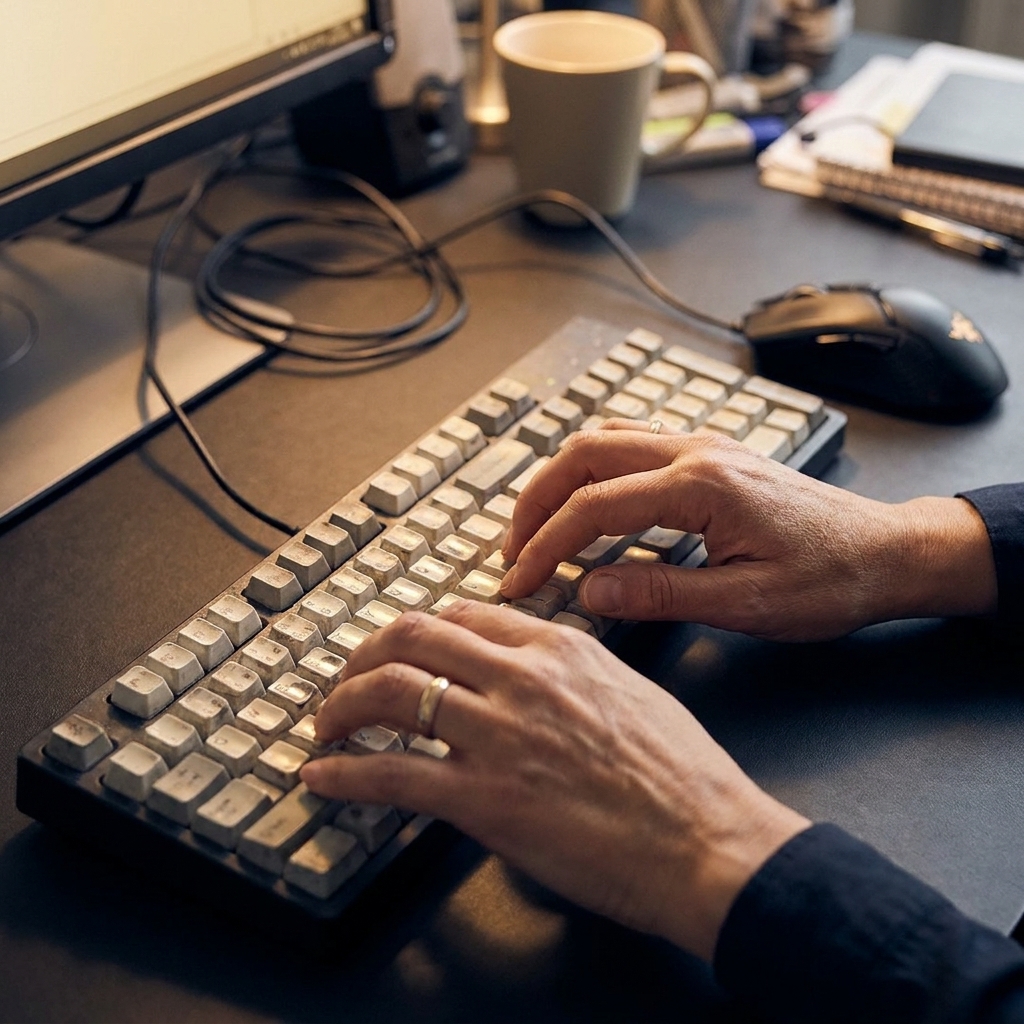
This is the QWERTY effect in internet-slang form: the physical layout of letters plus the pressure of real-time play can accidentally mint a new word, then culture keeps it because it feels right.
What “QWERTY effect” means online
“QWERTY effect” gets used in a couple of overlapping ways:
- The literal keyboard reality: certain letters are neighbors, so certain typos are more likely.
- The speed context: games, chats, and forums reward quick reactions, not careful spelling.
- The social layer: once a typo is recognizable, it becomes an inside joke, then a shibboleth, then a real word.
If you like this kind of language evolution trivia, our Trivia guide is basically made for you.
“Pwned” and the typo that stuck
Pwned (pronounced like “poned” by many people, though you will also hear “puh-OWNED”) is internet shorthand for dominated, defeated, embarrassed, or thoroughly outplayed. It is the kind of word you use when “owned” feels too clean and polite for the moment you are describing.
Where it came from
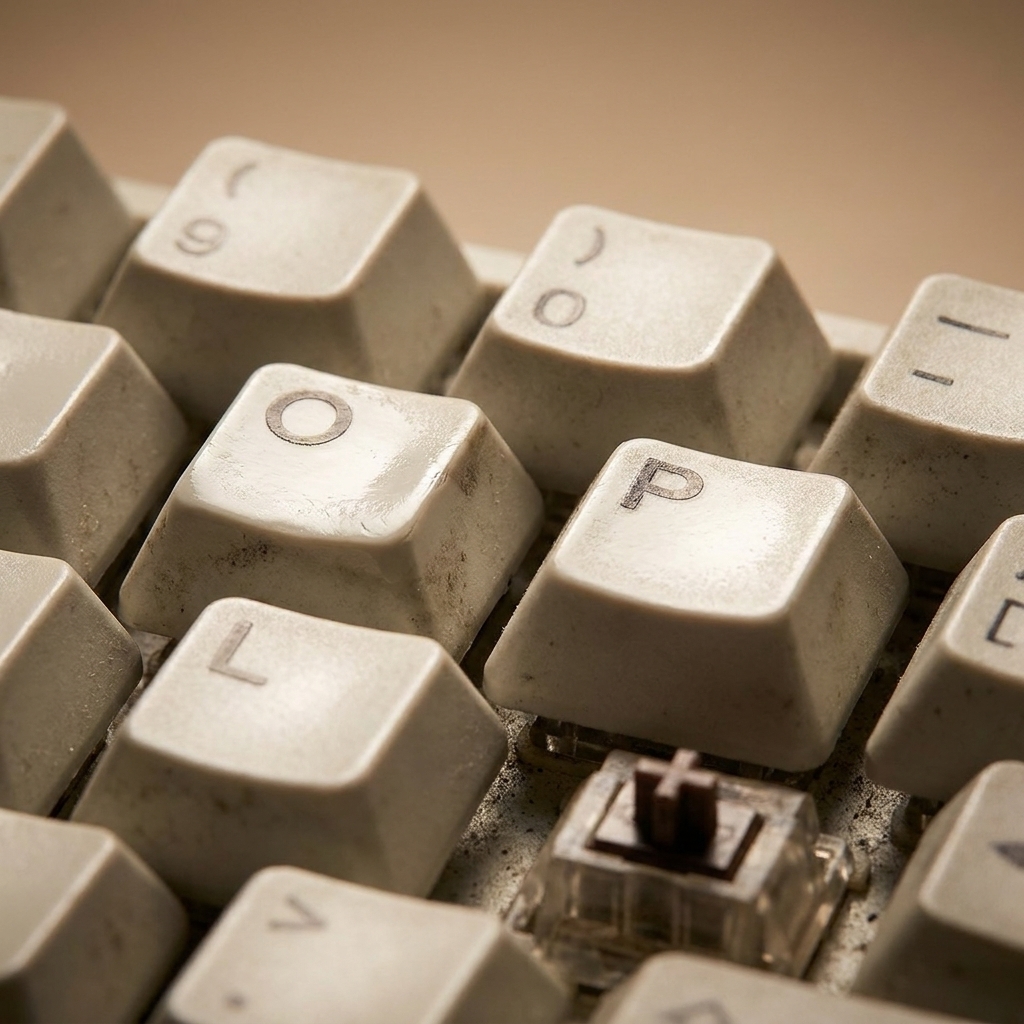
The popular origin story is simple and very believable: someone typed owned quickly and hit P instead of O. On a QWERTY keyboard, O and P sit right next to each other. In fast-paced gaming and chat, that kind of slip is extremely normal.
But then something very internet happened: people did not correct it. They repeated it. The misspelling looked punchier, more chaotic, and more in-group. It also visually “feels” like a stronger verb, which matters more than it should, and also exactly as much as it does.
Why gaming made it sticky
- Speed over precision: you type between rounds, after a clutch play, or mid-trash-talk. That is typo prime time.
- Performative tone: misspellings can read as smug, playful, or meme-y. “Pwned” is not neutral, and that is the point.
- Copyable brag format: it slots neatly into quick messages: “get pwned,” “you got pwned,” “pwnage.”
Quick timeline check
“Pwned” is strongly associated with early online multiplayer culture (late 1990s and 2000s), when chat logs, clan forums, and later meme sites helped the term spread and mutate. You see it evolve into nouns like pwnage and variations like pwnt.
For a broader look at how slang goes from niche to everywhere, I broke that process down in the lifecycle of internet slang.
Adjacent keys and big slang moments
One of my favorite bits of trivia is that a keyboard is basically a probability machine. Neighbor keys create predictable errors, and predictable errors are easier to recognize, repeat, and meme.
Why adjacent-key typos work
- They are plausible: everyone has fat-fingered a key next door, so the typo reads as authentic, not forced.
- They are consistent: the same slip can happen to lots of people, which helps a form spread.
- They carry tone: a typo can signal excitement, impatience, or “I am typing with adrenaline.”
This is also why intentional misspellings often try to look accidental. If you want more on that, see why memes misspell on purpose.
“Owned” vs. “pwned”
“Owned” existed before “pwned”, and it is still used. But “pwned” does something extra: it adds a layer of gamer-internet theatricality.
Owned
- Cleaner, more literal
- Can sound like straightforward boasting
- Works in lots of contexts, even outside gaming
Pwned
- Messier, more meme-coded
- Often playful, taunting, or performatively dramatic
- Signals an internet-native register, especially older gaming culture
Same core meaning, different social costume.
Other “oops, new word” moments
“Pwned” is the poster child, but it is not alone. Fast typing, niche communities, and repeated quoting can turn “wrong” into “right.” Here are a few nearby phenomena that show the same mechanism.
“L33t” and intentional “bad typing”
Not all keyboard-born slang is accidental. Leetspeak (like l33t for “elite”) is a deliberate style choice that grew out of early online spaces where users played with filters, in-group status, and hacker-adjacent aesthetics. It is a reminder that keyboard constraints and keyboard play both shape language.
“GG” and end-of-match efficiency
“Good game” becoming GG is not a typo, but it is absolutely keyboard-context slang: short, fast, widely understood, and tied to the rhythm of play. Games create repeated moments where everyone needs the same phrase quickly, and abbreviations thrive in those pressure points.
Keyboard smash as emotion
Even nonsense strings can function like words when the community agrees on the feeling: keyboard smashes for laughter or disbelief, all-caps bursts for hype, or exaggerated misspellings to signal mockery. The mechanics vary, but the principle is the same: what your hands did becomes part of what your message means.
How to read it in context
When I moderated big gaming and pop-culture groups, the biggest misunderstandings were not about definitions. They were about tone. Here is a quick way to decode terms like “pwned” when you see them:
- Check the setting: is this a game chat, a meme page, or a serious conversation? In gaming spaces, “pwned” is more likely to be playful ritual than real hostility.
- Look for exaggeration markers: all-caps, extra letters, and meme-y phrasing usually mean “performance,” not a genuine personal attack.
- Watch who is saying it to whom: friends roasting each other reads very differently than a stranger dunking in a comment section.
- Notice whether it is retro: sometimes people use “pwned” specifically because it sounds like an older internet era, the same way someone might ironically say “epic fail.”
If you like a step-by-step approach to decoding unfamiliar terms, this page is my go-to to share: work out unfamiliar internet slang.
Mini FAQ
Is “pwned” still used?
Yes, but it often shows up with a slightly retro flavor now, especially outside of gaming. In some circles it is sincere trash talk, and in others it is knowingly old-school.
Does “pwned” always mean bullying?
No. It can be mean, but it is frequently used as playful ribbing, especially among friends or teammates. Context and relationship matter a lot.
Was it definitely a typo of “owned”?
That is the most widely repeated and mechanically plausible explanation, especially because of the O/P adjacency on QWERTY. As with a lot of early internet slang, the exact first instance is hard to pin down, but the keyboard logic is strong and the cultural setting fits.
How does slang become “official”?
I have a whole piece on the process and the messy reality behind it: how Merriam-Webster decides internet slang is real.
The real takeaway
The funniest part of the QWERTY effect is that it is not really about technology, it is about people. A keyboard slip becomes a word only when a community decides it is useful: useful for bragging, useful for bonding, useful for signaling “yep, I was there.”
So the next time you see a “wrong” word that everyone seems to understand, do not assume you missed a memo. You are probably looking at a tiny fossil from a specific moment: a platform, a game, a rushed chat, and a pair of neighboring keys.