
In context
Absurdist Memes: Reading the Joke When Context Is Missing

Published · Last updated
I learned to love internet chaos the same way I learned to moderate it: one baffling post at a time. Back on message boards, you could usually quote-reply your way to clarity. Someone would explain the reference, someone else would argue about it, and a third person would post a reaction GIF that somehow settled the matter.
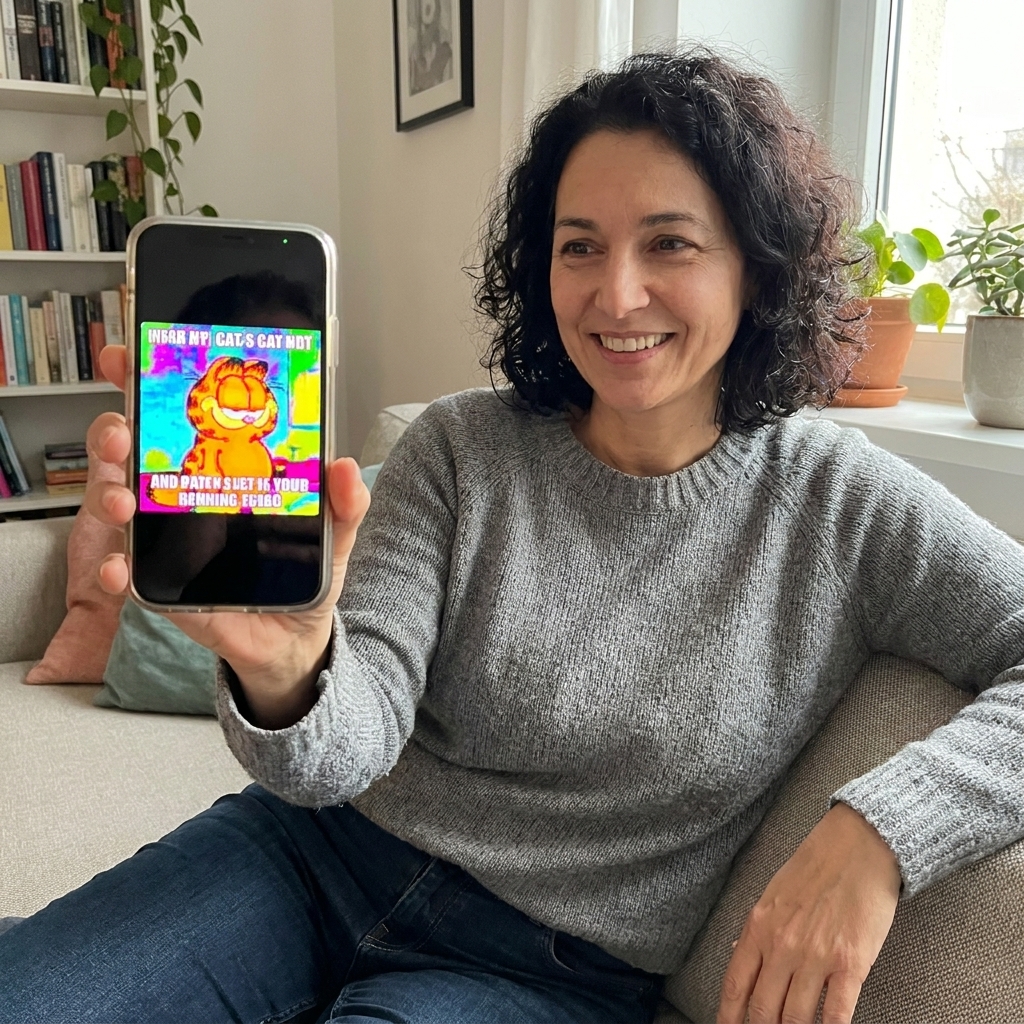
Absurdist memes do not offer that comfort. They often look like they were made in a hurry, edited five times too many, and posted mid-thought. The missing logic is not a bug. It is the joke. If you have ever stared at a deep-fried image and felt your brain sliding off it like butter on a hot pan, you are not failing to understand. You are encountering a format that treats “understanding” as optional.
What makes a meme “absurdist”
Absurdist memes are built around deliberate mismatch: the image suggests one thing, the caption suggests another, and the emotional punchline lands somewhere else entirely. Instead of context, you get vibes.
Common ingredients include:
- Non sequiturs: the caption does not logically follow the image.
- Surreal objects: a familiar thing presented “wrong” (a loaf of bread with the energy of a villain, an office printer treated like a divine oracle).
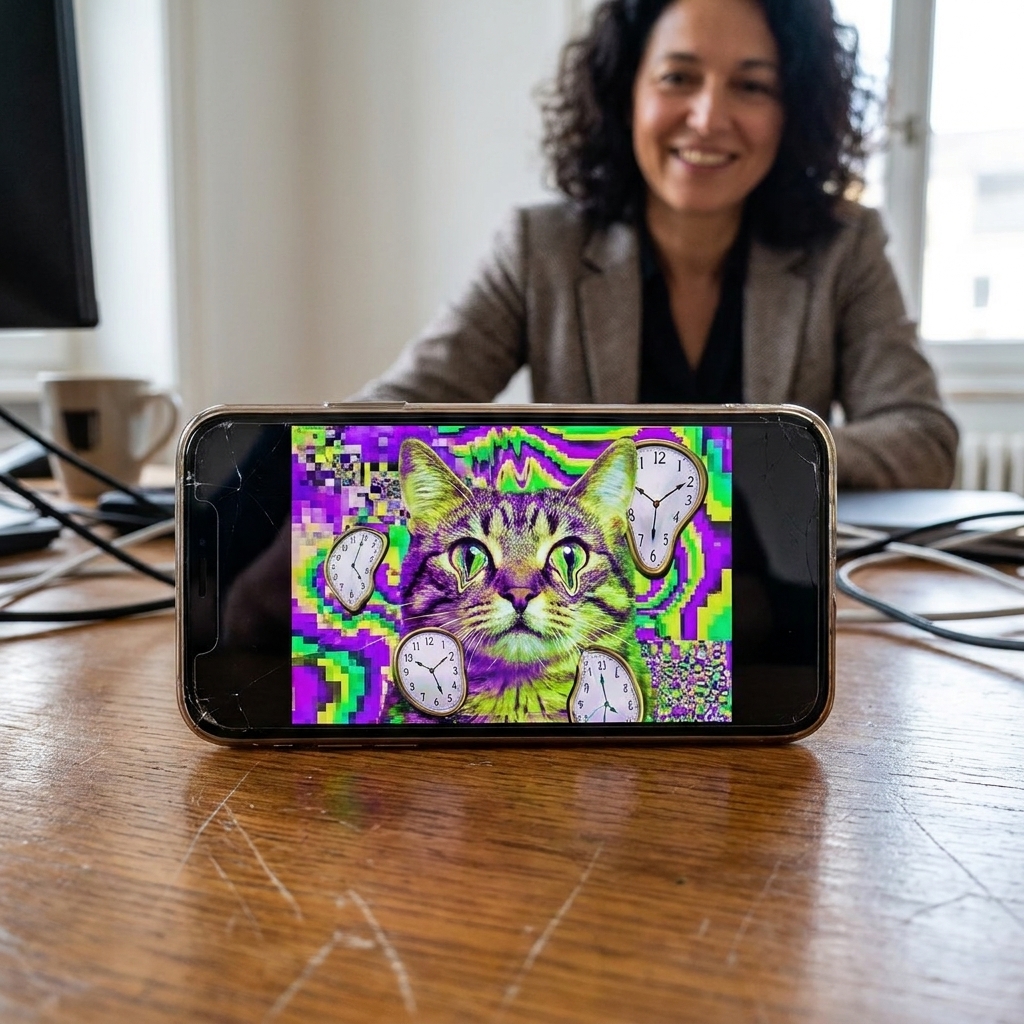
- Overprocessing: compression artifacts, extreme saturation, sharpness, lens distortions, or intentionally bad cropping. “Deep-fried” is basically a visual tone indicator.
- Anti-punchlines: the build-up implies a normal joke, then refuses to deliver it.
- Layered references: a phrase from one niche (gaming, stan Twitter, TikTok audio culture) dropped into an unrelated scene.
If you want a broader grounding in how memes evolve and why formats get reused in weird ways, our Guide to Memes is a good companion piece.
The secret context
Here is the twist that makes absurdist memes easier: you do not always need the “lore.” The shared understanding is often simpler than it looks.
1) The joke is the collision
Absurdist humor loves the feeling of two incompatible things being forced to coexist. The laugh is the clash itself. When you are looking for meaning, try looking for the impact zone where the caption meets the image.
2) The tone is the message
In many surreal memes, the caption is basically stage direction. Short, flat phrases like “me when it happens” or “bro really said” can be less about content and more about telling you how to “hear” the post. This is similar to what tone indicators do in text, just with visuals doing half the work. If you want that idea in a more literal form, see Tone Indicators (/s, /j) and Instant Context.
3) The format is the punchline
Sometimes the meme is funny because it is using a known structure in a knowingly broken way. A familiar reaction image paired with nonsense can read like: “I am doing the meme, but I am doing it wrong on purpose.”
A quick reading checklist
When context has been sanded off on purpose, I use a simple triage. It works whether you are on TikTok, Discord, Instagram, or deep in someone’s quote-tweets.
- What emotion is it aiming for? Panic, mock triumph, existential dread, fake sincerity, spite, delighted confusion.
- Who is being cast as what? Even nonsense memes assign roles: hero, villain, tiny creature, “guy at work,” cosmic judge.
- Is it dunking, bonding, or venting? Absurdity can be a hug, a weapon, or a stress ball.
- What is the meme asking me to recognize? A platform habit, a social situation, a familiar internet voice, a genre of complaint.
- Is the slang doing normal work or vibe work? Many words in absurd memes are used more like sound effects than dictionary definitions.
If you want a general method for unfamiliar slang that also applies here, keep Work Out Unfamiliar Internet Slang bookmarked. The tactics carry over, even when the meme is actively trying to be unhelpful.
How “deep-fried” visuals work
Deep-frying is not just an aesthetic. It is a signal. When an image is aggressively crunchy, oversaturated, or low-resolution, it often communicates one or more of the following:
- Irony: “I am not presenting this sincerely.”
- Intensity: the reaction is meant to feel too big for the situation.
- Distance: the creator is stepping back from the content and making it “a meme of a meme.”
- In-group familiarity: “If you know, you know,” but for image processing choices.
It is the same basic mechanism as deliberate misspellings like “smol” or “stonks,” where incorrectness is used to convey tone. If you enjoy that angle, Why Memes Misspell on Purpose pairs nicely with this kind of visual decoding.
Slang as props
Absurdist meme slang often works less like a definition and more like a costume. A word is chosen because it sounds right, looks right, or belongs to a specific internet voice.
“Me when” and “bro really”
These phrases can function like a laugh track. They tell you the post is framed as a reaction, even if the reaction is to something impossible.
“Core” labeling
Calling something “___core” turns it into an aesthetic object you can collect, not a situation you have to explain. If you want the mechanics of that suffix, see The -core Suffix Explained.
Borrowed dialects
Absurd memes love remixing language from different communities. That can be creative, but it can also flatten meaning, especially when terms come from AAVE or ballroom culture and get used as generic “internet funny words.” If you want a thoughtful refresher on why this gets complicated fast, read Ballroom, AAVE, and the Internet: Why Context Matters.
Platform clues
One reason absurdist memes feel slippery is that platforms train us to read differently.
- TikTok: audio is context. A surreal visual paired with a familiar sound can do most of the “explaining” without a single caption. If you are trying to read TikTok slang in general, How to Read TikTok Slang With Context Clues helps.
- Discord and Twitch: community in-jokes stack quickly. A nonsense image might be a callback to yesterday’s stream moment. See Twitch and Discord Slang Decoded.
- Twitter and Reddit: irony norms differ. The same absurd phrase can read like playful nonsense in one place and biting sarcasm in another. How Slang Shifts on Reddit vs Twitter breaks down that drift.
Practical tips
You can absolutely analyze an absurd meme. The trick is to analyze the function, not hunt a single correct translation.
Look for the anchor
Even surreal memes usually have one normal anchor: a recognizable character, a familiar photo, a well-known caption structure, a repeated phrase. Find that first, then treat the rest as distortion.
Read the comments
In absurd meme threads, the top comments often do one of three things:
- Confirm the intended vibe (“this is so real”)
- Escalate the nonsense (riffing is part of the culture)
- Quietly name the reference (“this is from that audio”)
If you see people escalating, the meme is probably meant to be played with, not solved.
Ask “What would this be if it were normal?”
A surprisingly effective move: translate the meme into a boring sentence. You will often find a very basic social feeling underneath, like “I am overwhelmed,” “I regret this,” or “I want attention but I am pretending I do not.” The absurdity is the wrapper.
Respect the no-translation boundary
Some memes are funny specifically because explaining them feels like doing taxes in a clown wig. If you are in a group chat, it is totally fine to say: “I do not get it, but I like the energy.” That is fluent.
Common absurd meme genres
Not every surreal meme is the same flavor of surreal. Here are a few patterns I see constantly, and what they tend to be doing socially.
Existential cartoons
Bright, cartoony visuals paired with dread. Usually signals burnout, overstimulation, or “I am fine” said through gritted teeth.
Overconfident nonsense
A meme that acts like it is delivering wisdom, but it is clearly gibberish. Often used as a playful power move: “I will speak with authority, but about nothing.”
Surreal sincerity
A warped image paired with a genuinely sweet caption. This is bonding humor. It says: “I cannot do earnestness straight, so I am doing it sideways.”
Anti-motivation
Fake inspirational phrasing, then a hard left turn into absurd defeat. Usually signals shared frustration, not actual hopelessness.
When absurd memes go wrong
Because absurdist memes strip away context, they can also strip away responsibility. A few quick red flags that the “nonsense” might be doing more than joking:
- Dehumanizing language hidden under irony: “It is just a meme” can be cover.
- Dogwhistles disguised as randomness: if commenters are treating it like a signal, it probably is.
- Mocking therapy language or identities for sport: surreal formatting does not magically make it harmless. If you want a deeper look at this pattern, When Pop Culture Misuses Therapy-Speak is worth reading.
The internet has always used humor as camouflage. Absurdity can be a funhouse mirror, but sometimes it is also a mask.
FAQ
Is there a correct meaning to absurdist memes?
Sometimes, but not always. Many are designed to create a shared feeling, not communicate a clean message. If you can identify the vibe and the social function, you are already reading it correctly.
Why do people like memes that make no sense?
Because “making sense” is not the only kind of satisfaction. Absurd memes can be relief, in-group bonding, creative play, or a safe way to express something intense without getting too personal.
What does “deep-fried” mean in memes?
It refers to intentionally overprocessed visuals: heavy compression, harsh colors, exaggerated sharpness. It is used to signal irony, intensity, or distance from sincerity.
How do I respond if I do not get it?
Mirroring the tone works better than forcing an explanation. Simple reactions like “this is cursed” or “I do not understand but I respect it” are often perfectly on-beat in absurd meme spaces.
Absurd memes are jazz
When I am moderating a community and a surreal meme rolls through like a foghorn, I remind myself: not everything is a riddle. A lot of it is rhythm. Absurdist memes are improvisation with shared internet instruments: reaction formats, borrowed slang, and visuals that scream on purpose.
You do not have to catch every reference to be part of the room. If you can hear the tone, you are already in the conversation.
If you want a broader map of how online slang gets born, mutates, and sometimes dies overnight, The Lifecycle of Internet Slang is a great next stop.