
In context
How Meme Structures Give You Context Clues for New Slang

Published · Last updated
I learned this the hard way as a forum mod: in my experience, people rarely get dragged for not knowing a new slang word. They get dragged for using it like it is a normal word when it is actually a punchline, a stance, or a role.
That is why meme structures are secretly your best dictionary. A lot of modern slang is not introduced with a neat definition. It shows up inside a template that tells you how to read it. If you can recognize the structure, you can often guess what the word is doing, even if you have never seen it before.

Meme templates are tiny scripts
Think of a text meme template like stage directions. It assigns:
- Roles (who is speaking, who is being judged, who is the audience)
- Timing (setup, turn, punchline, callback)
- Tone (sincere, ironic, deadpan, overly formal, mock-scientific)
- What counts as the joke (the word itself, the mismatch, the escalation, the overreaction)
So when a new slang term shows up in the “punchline slot,” the template is basically pointing at it and saying: this word is doing something funny, pointed, or socially meaningful. You just have to figure out what.
If you want a bigger picture view of why context matters so much, I keep returning to this idea across the site, including in Work Out Unfamiliar Internet Slang.
The fastest way to decode new slang inside a meme
When you see an unfamiliar term inside a familiar format, use this quick checklist:
- Locate the slot: is the word part of the setup, the twist, or the label?
- Identify the target: is the meme praising, complaining, flexing, self-owning, or calling someone out?
- Watch the grammar: noun slang often names a type of person or behavior, verb slang often describes a move, adjective slang often signals vibe or approval.
- Look for signal phrases: words like “but,” “meanwhile,” “and then,” “bro when,” and “POV” tell you when the meaning is about to flip, sharpen, or zoom in.
- Assume tone is doing half the work: many templates are irony machines. If you read them literally, you will misfire.
Tone is so central that whole sets of community conventions have formed to mark it. If you have ever wondered why people type things like “/j,” “/s,” or “/gen,” that is the same context problem in a different outfit. See Tone Indicators: /s, /j, and Instant Context.
Also, not every “template” is purely text. Some of the strongest scripts are visual: a reaction image, a familiar facial expression, a specific screenshot genre. The same decoding method still works. You just read the picture as the stage direction.
Common meme structures and what they tell you
Below are some of the most useful text-forward structures for decoding slang. I am focusing on the shape more than any single viral example, because the shape is what survives.
1) “POV:” puts slang in a perspective role
Structure: “POV: you are…” or “POV: me when…”
Context clue: POV tells you the post is performing a viewpoint. If slang appears here, it often describes a state (emotion, mindset, vibe) more than a factual event.
- If the slang is attached to “me when,” it is usually self-labeling and a little exaggerated.
- If it is “you are,” it is often gently accusatory or teasing.
More on how POV templates work as mini stage directions: The POV Meme Explained.
2) “Nobody:” highlights unnecessary behavior
Structure: “Nobody:” “Absolutely no one:” “Me:”
Context clue: the template signals that the final behavior is unprompted. If slang shows up as the “Me” action, it is likely naming an impulsive habit, a cringe tendency, or a self-aware compulsion.
It is especially helpful for slang that names a type of posting, spending, flirting, or spiraling. The template itself tells you, “this is something people do even when nobody asked.”
See the mechanics here: The Nobody Meme Format.
3) “Starter pack” turns slang into a category label
Structure: “[Thing] starter pack”
Context clue: starter packs classify a person or behavior by listing the “standard equipment.” If slang is the label, it is probably:
- a recognizable archetype (type of guy, type of fan, type of coworker)
- a microtrend identity (a look, a routine, a fandom stance)
- a shorthand for a bundle of traits, not one trait
Starter packs also tend to be affectionate-snarky, but they can absolutely slide into meaner territory depending on the community and the target. That spectrum helps you place the slang between roast and wink.
More: Starter Pack Memes Explained.
4) “Sir, this is a Wendy’s” flags a mismatch in seriousness
Structure: someone is acting intense, earnest, or dramatic, then the reply yanks the scene back to “you are doing all that… here?”
Context clue: slang placed into this kind of template often functions as a diagnosis of behavior: you are over-sharing, overreacting, or arguing in the wrong venue.
It is a context meme about implied setting, which makes it great for learning what a new term is used to dismiss. Full breakdown: Sir, This Is a Wendy’s and the Implied Scenario.
5) “The ratio” frames slang as public approval math
Structure: a post gets compared to replies, likes, retweets, quote posts, or any visible engagement counts.
Context clue: when slang appears around ratio talk, it often means one of two things:
- the slang is an insult or critique that is supposedly “validated” by the crowd
- the slang is a move (a way to respond, dunk, or shut down)
It also tells you you are in a performance arena, not a private conversation, which changes how words are used. See: The Ratio as Context.
6) Greentext structure signals folklore and “and then” escalation
Structure: short lines, often starting with arrows, building toward an ending beat.
Context clue: greentext trains you to read for:
- escalation (each line makes the situation weirder)
- a turn (the last line reframes everything)
- a moral (sometimes sincere, sometimes fake-sincere)
If an unfamiliar slang term appears early, it might set the scene. If it appears late, it is often the twist or the label for what just happened.
What to do when the template is the joke
Sometimes you recognize the structure and still feel lost because the meme is intentionally withholding the “normal” context. That is not you failing. That is a genre.
Absurdist and post-ironic meme spaces will use a familiar template, then drop in slang that is either:
- hyper-specific to a subcommunity
- deliberately decontextualized
- used wrong on purpose as part of the humor
In those cases, the best clue is not “what does the word mean in English,” but “what social move is this doing.” Is it signaling in-group membership, mocking the idea of having meaning, or forcing you to feel the mismatch?
If that sounds like your current timeline, you will probably enjoy Absurdist Memes: Reading the Joke When Context Is Missing.
Mini case studies
The same slang term can behave differently depending on the template. Here is what I mean, using made-up placeholder slang so we can focus on structure, not chasing a single viral word.
Case 1: “glorp” as a noun vs a vibe
- Starter pack: “Glorp starter pack” means “glorp” is an archetype with predictable traits.
- POV: “POV: you are in your glorp era” means “glorp” is a mood phase, not a fixed identity.
- Nobody: “Nobody… Me: glorp-posting again” means “glorp” is a compulsive behavior, probably a little embarrassing but self-aware.
Case 2: “to blim” as a verb that implies a social move
- Ratio framing: “He got blimmed and ratioed” suggests “blim” is a public-facing takedown or correction.
- Wendy’s mismatch: “Sir, this is a Wendy’s, stop blimming strangers” suggests “blim” is over-serious, intrusive, or unnecessary in casual spaces.
This is why I tell people: do not just ask “what does X mean.” Ask “what job is X doing here.” If you want a broader toolkit for that, How to Read TikTok Slang With Context Clues applies the same approach to short video captions and comment sections.
Red flags you read it wrong
Misreads usually come from treating a meme like a normal sentence. A few quick warning signs:
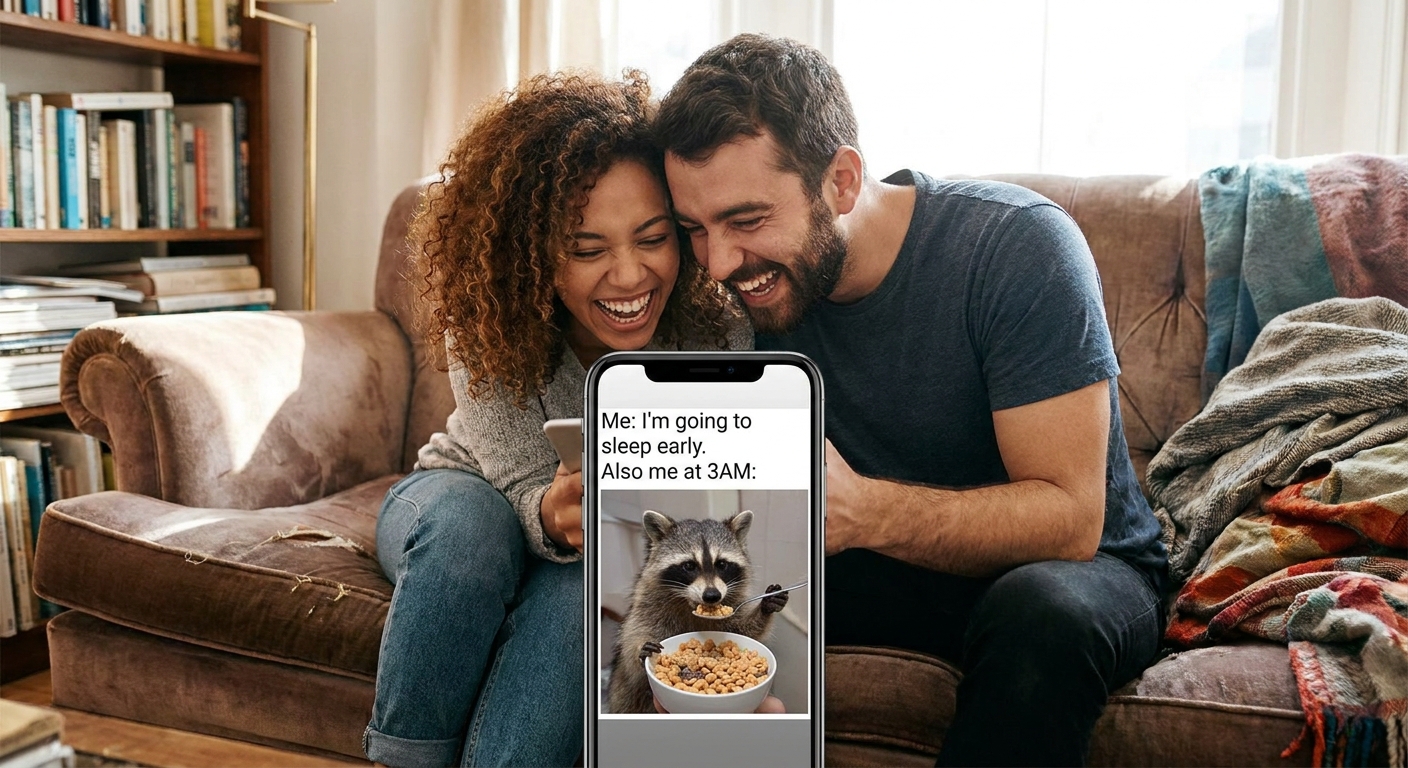
- You think the author is being sincere, but everyone is replying with “😭” or “LMAO” energy. You probably missed that the template is ironic.
- You repeat the slang outside the template and it falls flat. The meaning might be template-dependent, basically a line reading.
- You cannot tell who is being laughed at. In many meme structures, the “speaker” is the butt of the joke.
- The slang looks like a normal adjective but behaves like a verdict. That is often stan culture, fandom scoring, or platform-specific shorthand.
If you keep running into that last one, stan culture slang is its own little universe with rules that memes help carry. See Decoding Stan Culture Slang.
Translate it into plain English first
Here is my favorite trick from years of moderating arguments that started with “that is not what that means.”
- Rewrite the template without slang. Example: “Nobody: … Me: [unprompted behavior].”
- State the implied judgment. Is it admiration, disgust, envy, cringe, affection?
- Replace the slang with a boring phrase that fits the role. You are not trying to be perfect, just close.
- Check the replies. Are people treating it as a confession, a roast, or a flex?
Once you have the “boring translation,” you can usually land the real meaning with a little exposure.
FAQ
Do memes actually change what slang means?
They can. Memes do not just repeat slang, they standardize it by teaching people where it belongs in a sentence and what emotional beat it hits. Over time, that can narrow or widen a term’s meaning.
Why do some slang words only make sense inside a template?
Because some slang is less like a dictionary word and more like a cue, similar to a reaction image. The template supplies the tone and situation, and the slang supplies the punch.
What if I cannot identify the template at all?
Then you are missing the biggest context clue, and that is normal. Start by figuring out the platform and format first. A Twitter quote-post dogpile reads differently than a TikTok caption or a Discord chat. This is exactly why slang shifts across platforms. See How Slang Shifts on Reddit vs Twitter.
Is it okay to ask what a meme word means?
Yes. The low-friction way is to ask, “Is this being used sincerely or ironically here?” or “Is the joke that they are overreacting?” Those questions respect the structure, which gets you better answers than “define X.”
The big takeaway
If slang is the word, meme structure is the grammar. Templates teach you who is speaking, what counts as the punchline, and whether you are supposed to nod along or laugh at the speaker.
Once you start spotting those structures, unfamiliar slang stops feeling like a secret code and starts feeling like what it usually is: a normal human attempt to communicate faster, with more tone, to the right audience.